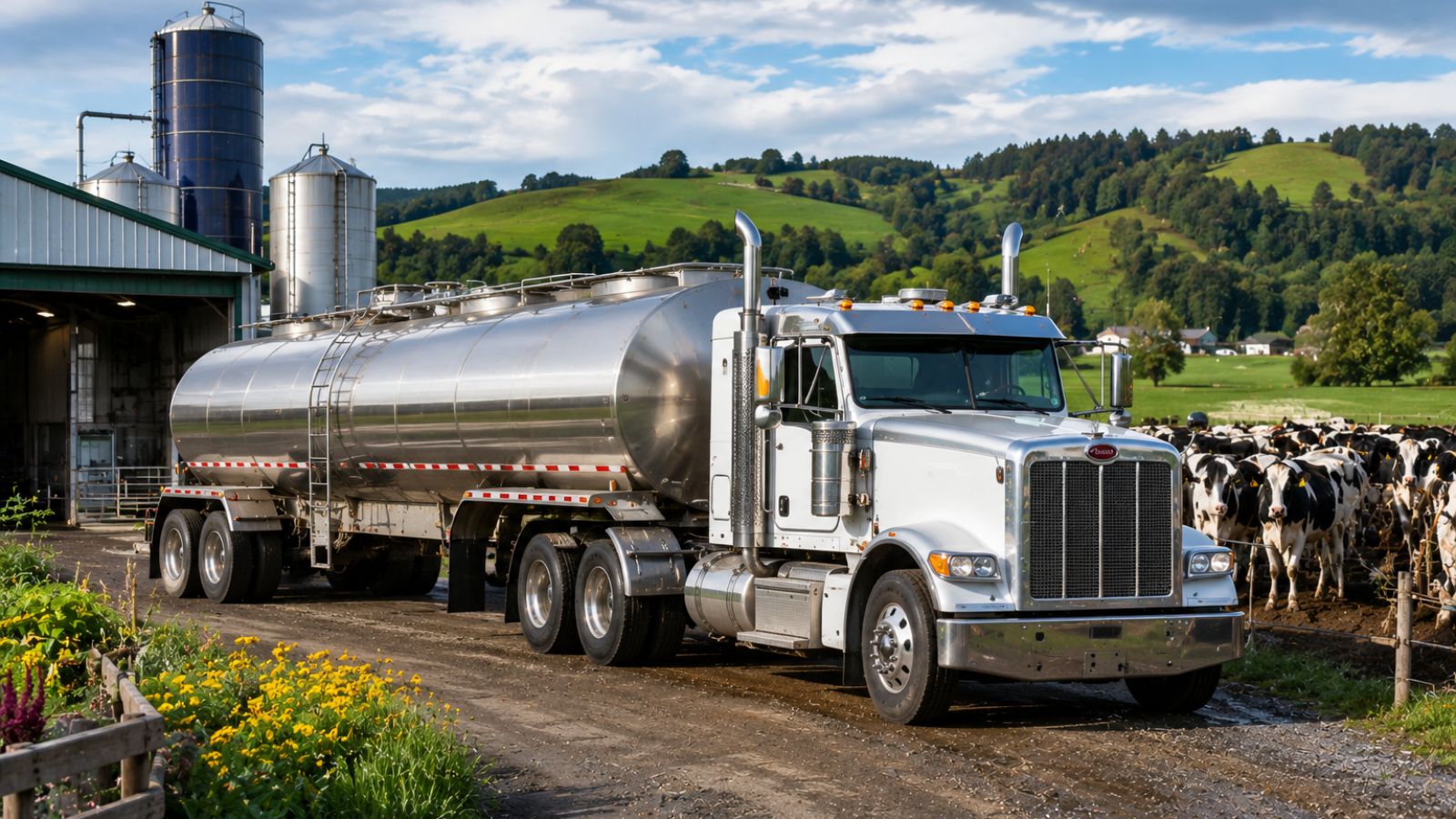
Milk Hauling Insurance in Oregon: What Dairy Haulers Need to Know
Milk hauling insurance in Oregon needs to account for risks that don’t come with ordinary dry freight. You’re transporting a perishable food product in an expensive stainless-steel tanker, often on tight pickup schedules and through changing Oregon road and weather conditions.
A milk hauling accident can involve much more than damage to the tractor. You could have a damaged tanker, thousands of gallons of lost milk, towing and recovery expenses, cleanup costs, and liability to other people or property.
Whether you’re an owner-operator picking up milk from local dairies or managing multiple tanker trucks, your insurance needs to match the operation you’re actually running.
Why Oregon Milk Hauling Is Different
Milk doesn’t wait.
Dairy farms need regular pickups, and processors expect loads to arrive according to schedule. That can put milk haulers on the road early in the morning, overnight, during bad weather, and on rural roads that aren’t always easy to navigate with a loaded tanker.
The cargo itself creates another issue. Raw milk is perishable and can be rejected if something happens that makes it unsuitable for processing.
That means Oregon dairy haulers need to look closely at cargo coverage instead of assuming a standard motor truck cargo policy handles every milk-related loss.
Motor Truck Cargo Coverage for Raw Milk
Motor truck cargo insurance can protect raw milk against covered losses while it’s in your care, custody, and control.
But the cargo limit isn’t the only thing that matters.
Suppose you’re hauling a full tanker to a processor and the refrigeration or other equipment associated with the operation fails. The processor rejects the milk.
Whether insurance pays for that load depends on the cause of loss and your policy wording.
Milk haulers should specifically ask about exclusions or limitations involving:
- Temperature change
- Contamination
- Spoilage or deterioration
- Mechanical or equipment failure
- Delay
- Rejected loads
- Loading and unloading
A $100,000 cargo limit doesn’t automatically mean every $100,000 loss involving milk is insured.
Commercial Auto Liability
Commercial auto liability is the foundation of a trucking insurance program.
It helps protect your company when you’re legally responsible for covered bodily injury or property damage resulting from an accident.
This is especially important with tanker trucks. A loaded milk tanker is a heavy commercial vehicle, and liquid surge can affect how the truck responds to braking, turns, and sudden maneuvers.
Experienced tanker drivers matter.
Physical Damage for the Tractor
Your tractor represents a major business investment.
Physical damage coverage can protect it against covered collision and comprehensive losses. The truck should be insured at an appropriate value, particularly if you’ve recently purchased newer equipment.
Don’t forget about deductibles. A lower premium doesn’t necessarily help if the deductible is too high for your business to comfortably absorb after a loss.
Milk Tanker Trailer Insurance
A food-grade stainless-steel tanker can be expensive to replace.
Make sure every tanker your company owns is properly included in the policy and insured for an appropriate value.
Physical damage coverage may protect the tanker against covered losses involving collisions, overturns, theft, fire, and certain weather events.
For Oregon operations, weather-related losses deserve particular attention. Wind, winter conditions, falling trees, and other hazards can damage equipment even when a truck isn’t moving.
What Happens When a Milk Tanker Rolls Over?
Consider a loaded milk tanker traveling along a rural Oregon highway.
The driver encounters a slick curve, loses control, and the truck rolls onto its side.
Now you may have several losses at once.
The tractor is damaged. The stainless-steel tanker may need major repairs or replacement. The raw milk cargo is lost. Milk spills onto the roadside. Heavy recovery equipment is needed to remove the combination.
There may also be third-party property damage and cleanup expenses.
Different portions of the trucking insurance policy may respond to different parts of that accident.
That’s why liability insurance alone isn’t enough to protect a dairy hauling operation.
Pollution Liability and Milk Spills
Milk may not sound like a pollution exposure in the same way diesel fuel or chemicals do, but a large release can still create environmental and cleanup concerns.
A tanker can carry thousands of gallons.
If that product enters a ditch, stormwater system, stream, or other sensitive area after an accident, cleanup and response expenses can become substantial.
Oregon milk haulers should review how their commercial auto policy handles pollution-related losses and whether additional pollution liability coverage or endorsements are appropriate.
Don’t wait for a rollover claim to find out where the coverage stops.
Oregon Weather and Dairy Trucking
Oregon milk haulers can encounter very different conditions depending on where they operate.
Western Oregon routes may involve frequent rain, wet pavement, fog, and reduced visibility. Routes through higher elevations can introduce snow and ice. Rural dairy pickups can also require trucks to enter narrow farm driveways and loading areas.
These conditions become more important when you’re pulling a tanker.
Liquid surge changes vehicle dynamics, so speed management, following distance, and smooth braking are critical.
Maintenance is equally important. Tires, brakes, lights, suspension, tanker connections, valves, and other equipment should be checked consistently.
DOT Compliance Matters to Insurance Companies
A good insurance application isn’t only about your trucks.
Underwriters may review driver records, accidents, claims, roadside inspections, DOT safety information, operating radius, and years in business.
Poor maintenance history or repeated driver violations can make a dairy trucking operation harder or more expensive to insure.
Strong pre-trip inspections and documented maintenance can help reduce breakdowns while supporting a better overall safety record.
How Much Does Milk Hauling Insurance Cost in Oregon?
There isn’t a standard rate for every milk hauler.
Pricing can depend on your number of trucks, tractor and tanker values, driver experience, loss history, DOT record, operating radius, annual mileage, cargo limits, years in business, and the exact commodities you transport.
A single-truck owner-operator running local dairy pickups will be evaluated differently from a multi-truck operation running longer routes throughout Oregon and neighboring states.
The best approach is to give the insurance company an accurate picture of your operation.