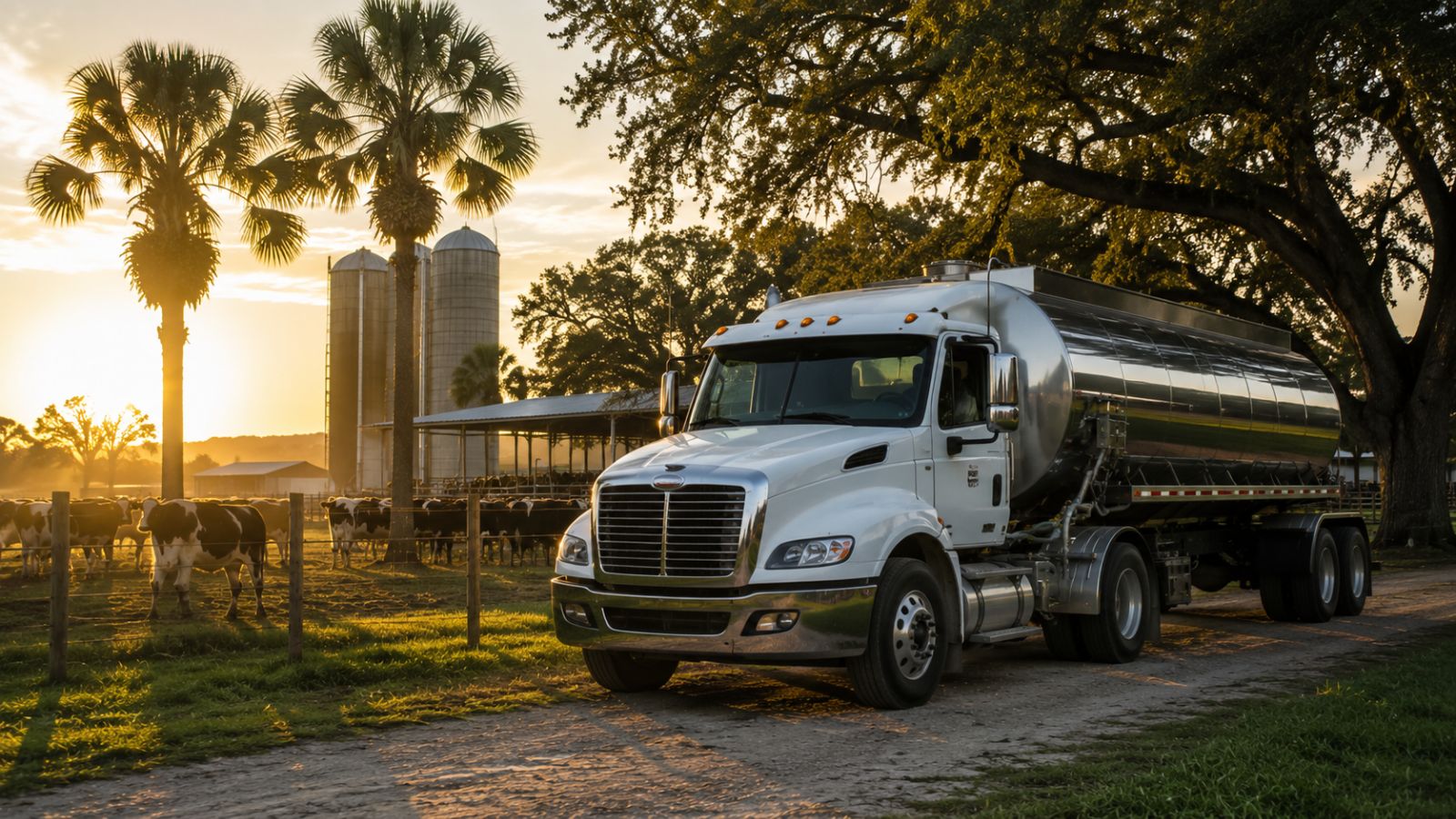
Milk Hauling Insurance in Florida
Florida dairy farms rely on milk haulers every day to move raw milk from the farm to processing facilities safely and on schedule. Milk hauling insurance in Florida needs to account for more than the tractor. Expensive stainless-steel tankers, perishable cargo, contamination concerns, spills, and Florida’s heat all create exposures that a standard general freight policy may not properly address.
Whether you’re an owner-operator running one tanker or operate several trucks on dedicated dairy routes, your insurance should reflect what you’re actually hauling.
Why Milk Hauling Has Unique Insurance Risks
Raw milk is different from most agricultural commodities because one incident can make an entire tanker load unusable.
A rollover is an obvious example. The tractor and tanker could be damaged, milk could spill, and cleanup may be necessary. But a truck doesn’t have to roll over for a cargo problem to occur.
Contamination, temperature issues, equipment problems, or other covered events can potentially result in rejected milk. Whether insurance pays for that loss depends on the cause and the wording of the cargo policy.
That’s why milk haulers should know exactly what their cargo policy covers before a rejected load happens.
Florida Heat Makes Milk Hauling Different
Florida’s climate creates an obvious concern for anyone transporting a perishable product.
Hot and humid conditions can make proper handling and temperature control especially important. Trucks may also encounter heavy rain, tropical weather, flooded roads, and severe storms.
Milk doesn’t stop moving because the weather is bad. Dairy cows continue producing every day, so many haulers operate consistent routes throughout the year.
Reliable equipment, good maintenance, and experienced tanker drivers are critical.
Important Insurance Coverage for Florida Milk Haulers
Commercial Auto Liability
Commercial auto liability helps protect the trucking company when a covered accident results in bodily injury or property damage to someone else.
Loaded milk tankers are heavy vehicles that may travel rural farm roads, highways, and congested areas. Your liability coverage needs to accurately reflect your operation.
Physical Damage
Tractors used in dairy transportation can be expensive to repair or replace.
Physical damage coverage can protect scheduled equipment against covered collision and comprehensive losses, depending on the policy.
Milk Tanker Trailer Insurance
Food-grade stainless-steel tanker trailers are specialized equipment and can represent a major investment.
Make sure your tanker is properly insured and that the value listed on the policy reflects the equipment you’re actually operating.
Motor Truck Cargo Insurance
Cargo insurance deserves extra attention when you’re hauling milk.
Don’t assume a standard motor truck cargo policy covers every rejected or spoiled load. Ask how the policy handles contamination, temperature-related loss, equipment failure, overturns, spills, and disposal expenses.
The cargo limit matters, but the exclusions and covered causes of loss matter just as much.
Pollution Liability
A tanker spill can potentially involve significant cleanup costs.
Pollution coverage can be important because standard commercial auto and cargo policies may contain limitations or exclusions for certain pollution and cleanup exposures. Review how your policy would respond if a tanker releases a large quantity of milk following an accident.
Tanker Experience Matters
Driving a liquid tanker isn’t the same as pulling a dry van.
Liquid movement inside the tank can affect handling, braking, and stability. Drivers need to understand how their equipment responds during turns, sudden braking, and changing road conditions.
From an insurance standpoint, driver experience, accident history, violations, and DOT safety performance can all affect underwriting.
A fleet with experienced tanker drivers and a good maintenance program is generally easier for an insurance company to evaluate than an operation with frequent driver turnover and a poor inspection history.
What Does Milk Hauling Insurance Cost in Florida?
There isn’t one standard price.
Insurance companies typically consider your number of trucks, tanker values, driver experience, operating radius, DOT history, previous claims, years in business, annual mileage or revenue, cargo limits, and the exact commodities you transport.
A one-truck owner-operator running a local dairy route has a different exposure than a fleet transporting milk throughout Florida and neighboring states.
Providing accurate information about your operation helps an agent find insurance that actually fits what you do.
Why Specialized Milk Hauling Insurance Matters
General freight insurance and dairy transportation insurance aren’t always interchangeable.
Milk haulers operate specialized tanker equipment and transport a perishable food product where contamination or a serious accident can destroy the value of an entire load.
The goal isn’t simply to get a certificate showing cargo insurance. It’s to understand whether the policy would actually respond to the losses your operation is most likely to face.