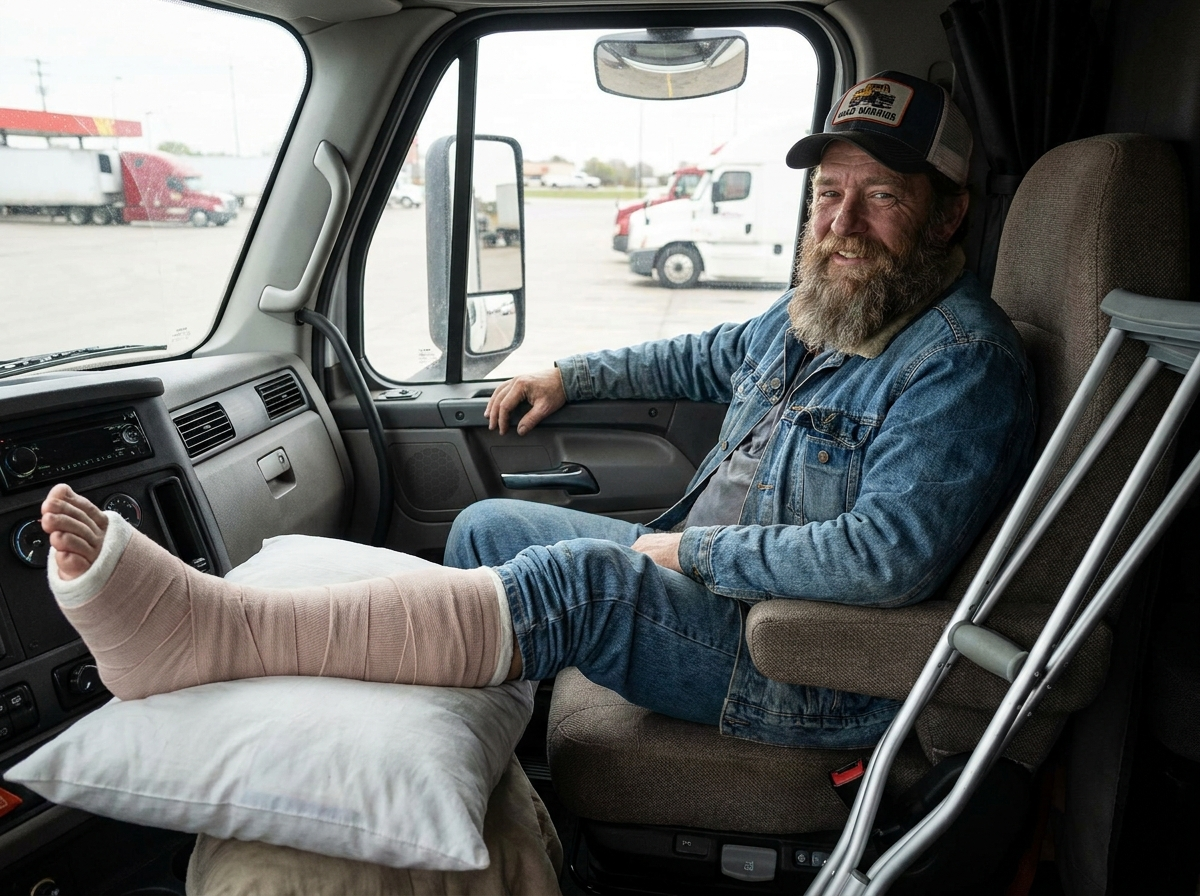
Workers compensation is the coverage that pays when an employee gets hurt on the job. Medical bills, lost wages, rehab, and in the worst cases survivor benefits to a family. If you have W2 employees, workers comp is the policy that protects them and protects you from getting sued by them.
Most states require workers comp if you have any employees. Some states have agricultural exemptions, but those exemptions are narrow and trickier than people think, especially for ag trucking operations that look like trucking companies more than farms.
Workers comp on a trucking operation is rated by class code and payroll. Drivers, mechanics, dispatch, office staff, and shop help all sit in different class codes with different rates. The rate per $100 of payroll for an over-the-road driver runs much higher than the rate for an office clerk, because the exposure is different.
What It Covers
Medical bills
Emergency room, surgery, hospital stays, physical therapy, prescriptions, follow-up visits. All of it gets paid by workers comp with no out-of-pocket cost to the employee.
Lost wages
Usually around two-thirds of the worker's average weekly wage, up to a state-set maximum, while the employee is out of work and recovering. Wage benefits start after a short waiting period that varies by state.
Permanent disability benefits
If the injury causes permanent impairment, the employee gets a benefit calculated under the state's disability schedule. Larger amounts for more severe impairment.
Death benefits
In a fatal injury, workers comp pays funeral expenses and ongoing benefits to surviving spouse and minor children. Amounts vary by state.
Vocational rehab
If the injured worker cannot return to the same job, workers comp pays for retraining for a different occupation.
Employer's liability (Part B)
Protects the employer from certain lawsuits brought by employees or third parties related to a work injury. Limits typically run $1,000,000 each accident.
What It Does Not Cover
No policy covers everything. Here is what falls outside a standard workers compensation policy so you know where the gaps are.
Independent contractors
True 1099 owner-operators are not covered by the carrier's workers comp policy. They need occupational accident or their own workers comp policy in their name.
Injuries while drunk or on drugs
If the worker is impaired and that is documented, the claim can be denied. Post-accident testing matters.
Self-inflicted injuries
Intentional self-harm is excluded. So is horseplay that goes wrong in some states.
Injuries off the job
Workers comp covers work-related injuries only. A driver hurt at home on a weekend has to use personal health insurance.
Auto liability exposures to the public
If a driver causes a wreck and hurts the other driver, that is auto liability. Workers comp only covers the employee. Some states have intersections where workers comp and auto coordinate, but the basic split holds.
Independent farmers and owners not on payroll
A sole proprietor or partner who does not draw a wage is usually not covered by the policy unless they elect coverage. Most states allow ownership elections, and most ag trucking owners should elect in.
Coverage Limits and Options
Statutory benefits are set by each state. The medical, wage, and disability benefits are not adjustable. They are whatever the state schedule says.
Employer's liability limits (Part B) are adjustable. The standard limit is $100,000 each accident, $100,000 each disease, $500,000 policy. Most ag trucking operations carry $1,000,000 / $1,000,000 / $1,000,000 because it is cheap and shipper contracts often require it.
Umbrella over workers comp is available and cheap. Buying a $1 million umbrella that sits over auto liability, general liability, and employer's liability all at once is one of the highest-value policies most ag operations can buy.
Other-state coverage (Section 3.C) handles employees who occasionally work in states not listed on the policy declarations. If you have drivers from South Dakota that occasionally pick up a load in Iowa or Minnesota, this is the endorsement that keeps you covered.
Real Claim Scenarios
Dollar amounts are typical ranges based on industry claim data, not specific cases.
Driver falls off the trailer while strapping a load
Slipped on icy decking, fell six feet, broke wrist and ankle. Six weeks off work, two surgeries. Total claim runs $25k to $75k including medical and wage benefits, more if the wrist surgery does not heal cleanly.
Mechanic crushed by a falling tire and rim assembly
Truck tire being changed in the shop kicks off the rim mount and hits the mechanic. Crush injury to the chest, broken ribs, four weeks off. Total claim $40k to $90k.
Livestock kick to the leg
Driver loading or unloading cattle gets kicked. Tibia fracture, surgery, eight weeks off work. Total claim $30k to $80k.
Back injury from repetitive loading
Driver developed a chronic back issue from years of strapping and tarping. Goes out on a longer-term claim with rehab, light duty, and eventual partial impairment rating. Total claim runs $50k to $150k+ depending on the impairment rating.
Driver fatality from a single-vehicle rollover
Driver killed in a single-vehicle wreck during work hours. Workers comp pays death benefits to the surviving family. Total payout depends on age, surviving children, and state schedule. Range commonly runs $300k to $1M+ over the life of the benefit.
What Affects the Cost
Frequently Asked Questions
Are family members on the payroll covered?
Usually yes if they are on the payroll. Most states automatically cover family member employees. Sole proprietors, partners, and corporate officers can usually elect in or out. We help you make that decision.
What if I have a driver who lives in one state but hauls in another?
The other-state endorsement (Section 3.C) on a workers comp policy handles temporary work in non-primary states. We list the primary state and add the other states where work is performed.
Are owner-operators leased to my company my responsibility for workers comp?
It depends on the lease and the state. If they are truly independent contractors with their own authority and their own workers comp or occupational accident, they are usually their own responsibility. If they are working under your authority and your control, some states will consider them your employees regardless of how the contract is written.
Will my workers comp cover injuries during loading or unloading at a customer site?
Yes. As long as the activity is part of the job, workers comp follows the employee. Loading at a farm, unloading at an elevator, washing out a trailer at a dairy. All on the job.
What is the experience mod and when does it kick in?
The experience modification rating is a number that compares your claim history to industry average. It usually kicks in after 3 years of operating in the same state with the same NCCI carrier reporting. A clean mod under 1.0 gets you discounted rates. A bad mod over 1.0 increases your premium.
Can I run my farm employees under farm workers comp instead of trucking workers comp?
Sometimes, depending on the state and the nature of the work. A pure farm employee doing field work may be on farm comp. A driver who hauls for hire may need trucking comp. Many ag operations have employees who do both, and we structure the policy to match.