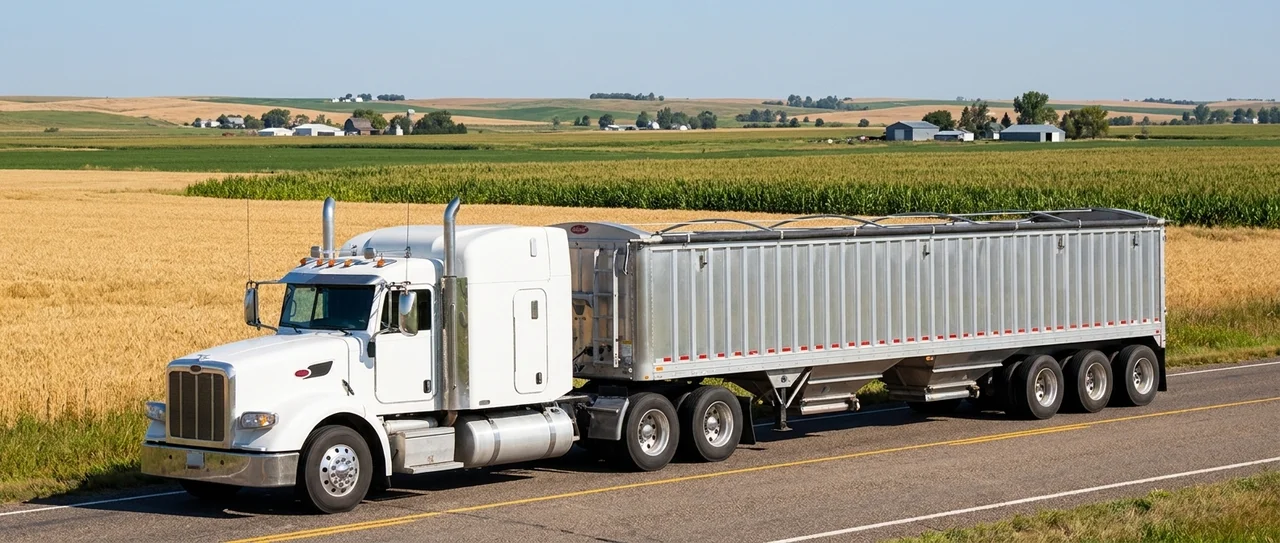
Physical damage is the coverage on your own truck and trailer. If you roll a hopper bottom in a ditch, if hail beats up your day cab in the yard, if some kid backs into your livestock pot at the truck wash, physical damage is what pays to fix or replace it.
It splits into two parts. Collision pays for damage from a wreck or rollover. Comprehensive (sometimes called other than collision) pays for fire, theft, vandalism, hail, flood, hitting an animal, and most other non-wreck events. You can buy them together or separately depending on what you need.
Physical damage is optional in most states, which means nobody is going to force you to carry it. The lienholder on your truck loan is going to force you to carry it, though. And if you own the equipment free and clear, you are probably going to carry it anyway because a $180,000 day cab is not a thing most operations can write off and replace from cash flow.
What It Covers
Collision damage
You hit something or get hit. Single-vehicle rollovers, multi-vehicle wrecks, jackknifes, ramming a loading dock, sliding off an icy road. If two objects collided, this section pays.
Fire and lightning
Engine fire, brake fire from a stuck slack adjuster, lightning strike that takes out the ECM, garage fire that takes out the unit. All covered.
Theft and vandalism
Truck stolen out of a yard. Tools stolen out of the cab (often a sublimit). Catalytic converter cut off the truck. Tires slashed. Spray paint on the trailer.
Hail and weather
Hail damage to the cab and hood, windshield cracks from wind-driven debris, tornado damage in the yard. Comprehensive picks up storms.
Hitting an animal
Deer, cattle out of a pasture, livestock that got loose. Covered as a comprehensive claim, not collision, so a no-fault hit usually does not surcharge you the same way as an at-fault wreck.
Falling objects
Tree limb on the cab. Load shifting on the truck ahead and a bale hitting your windshield. Covered.
Towing and recovery
After a covered wreck, the cost to drag your truck to a shop. Most policies include a towing and labor sublimit. Bigger limits available for heavy recovery scenarios where a wrecker company has to use cranes.
What It Does Not Cover
No policy covers everything. Here is what falls outside a standard physical damage policy so you know where the gaps are.
Mechanical breakdown
Engine grenades, transmission goes out, head gasket fails. That is not a physical damage event. You would need a separate equipment breakdown policy.
Wear and tear
Worn tires, fading paint, brake pads, normal aging. Physical damage covers sudden accidental loss, not maintenance items.
Damage from overloading
If you load past the rated capacity and the frame cracks, the carrier can deny the claim. Stay legal on weights.
Cargo damage
Damage to the load is motor truck cargo, not physical damage. Even if the same wreck damages both the trailer and the cargo, they are separate claims.
Personal items in the cab
Most policies have a small sublimit for tools and personal property, often $1,000 to $2,500. Bigger items need scheduled coverage or a separate inland marine policy.
Damage during racing or stunt use
Not a normal exclusion for ag haulers, but worth knowing. Any use outside the policy declarations can void coverage.
Coverage Limits and Options
Actual cash value (ACV) is the depreciated value of the unit at the time of loss. Most older trucks and trailers are written this way. ACV reflects what the market would actually pay for the unit the day before the wreck, which is rarely what the truck means to you.
Stated amount means you and the carrier agree on a value, and at a total loss the payout is the lower of stated amount or actual cash value. It limits the carrier's exposure on a unit you have valued high.
Agreed value means the carrier pays the agreed value at a total loss, period. Premium is higher than stated amount. Worth it for new units, leased units, or any equipment where you cannot afford a depreciation argument.
Deductibles typically range from $1,000 to $5,000 per unit for ag fleets. Higher deductibles drop premium meaningfully. Most ag haulers run $2,500 or $5,000 deductibles on the power units and a smaller deductible on the trailers.
Real Claim Scenarios
Dollar amounts are typical ranges based on industry claim data, not specific cases.
Hopper bottom rollover on a county road
Soft shoulder gives out and a loaded hopper rolls. Cab is totaled, trailer is repairable. Total claim runs $80k to $180k depending on age and option packages on the cab. Towing and recovery alone can be $8k to $20k.
Hail event in a feedlot yard
Storm rolls through and beats up four trucks parked overnight. Bodywork, hoods, windshields, rooftop fairings. Per-truck claim averages $6k to $18k. Comprehensive pays it, and most carriers waive the deductible on hail in some states.
Stolen day cab
Truck disappears from a rest area overnight. Total loss after the carrier completes the investigation. Payout runs at agreed value or actual cash value, typical range $60k to $150k for a 5 to 10 year old highway day cab.
Combine hauler hits a deer
Whitetail comes out at dusk. Driver is fine. Front end of the cab is destroyed, radiator, hood, headlights. Comprehensive (not collision) claim runs $8k to $25k. Because it is comp, not at-fault, the driver and the fleet usually do not get surcharged the same way as a collision.
What Affects the Cost
Frequently Asked Questions
What is the difference between collision and comprehensive?
Collision is wreck damage. Comprehensive is just about everything else, including fire, theft, vandalism, hail, flood, and hitting an animal. You can carry just one or both. Most ag haulers carry both unless an older trailer is paid off and they want to drop coverage to save premium.
Should I carry physical damage on a paid-off trailer?
It depends on the trailer value and how easily you could replace it. A 20-year-old hopper trailer worth $8,000 might not justify $400 to $600 a year in premium. A 3-year-old cattle pot worth $90,000 absolutely does.
What is trailer interchange?
A trailer interchange agreement is when you pull a trailer that belongs to someone else, often a shipper or another carrier, under a written agreement. The agreement usually makes you responsible for damage to the trailer while in your possession. Trailer interchange coverage handles that exposure.
Will physical damage cover damage from overloading?
Usually not. If you load past the rated capacity and the trailer or frame fails, most carriers will deny the claim. Run legal weights.
How fast does a total loss settle?
On a clean total loss with agreed value, settlement can happen in 2 to 4 weeks. ACV claims sometimes take longer because the carrier has to research market values. Disputes over value are the most common reason settlements drag out, which is why we recommend agreed value on newer or financed equipment.
Does physical damage cover a load coming loose and damaging the trailer?
If the load shifts and damages the inside of the trailer, that is usually a physical damage claim. If the load falls off the trailer, the property damage to the truck behind you is auto liability, and the lost cargo is motor truck cargo. One event can trigger multiple coverages.