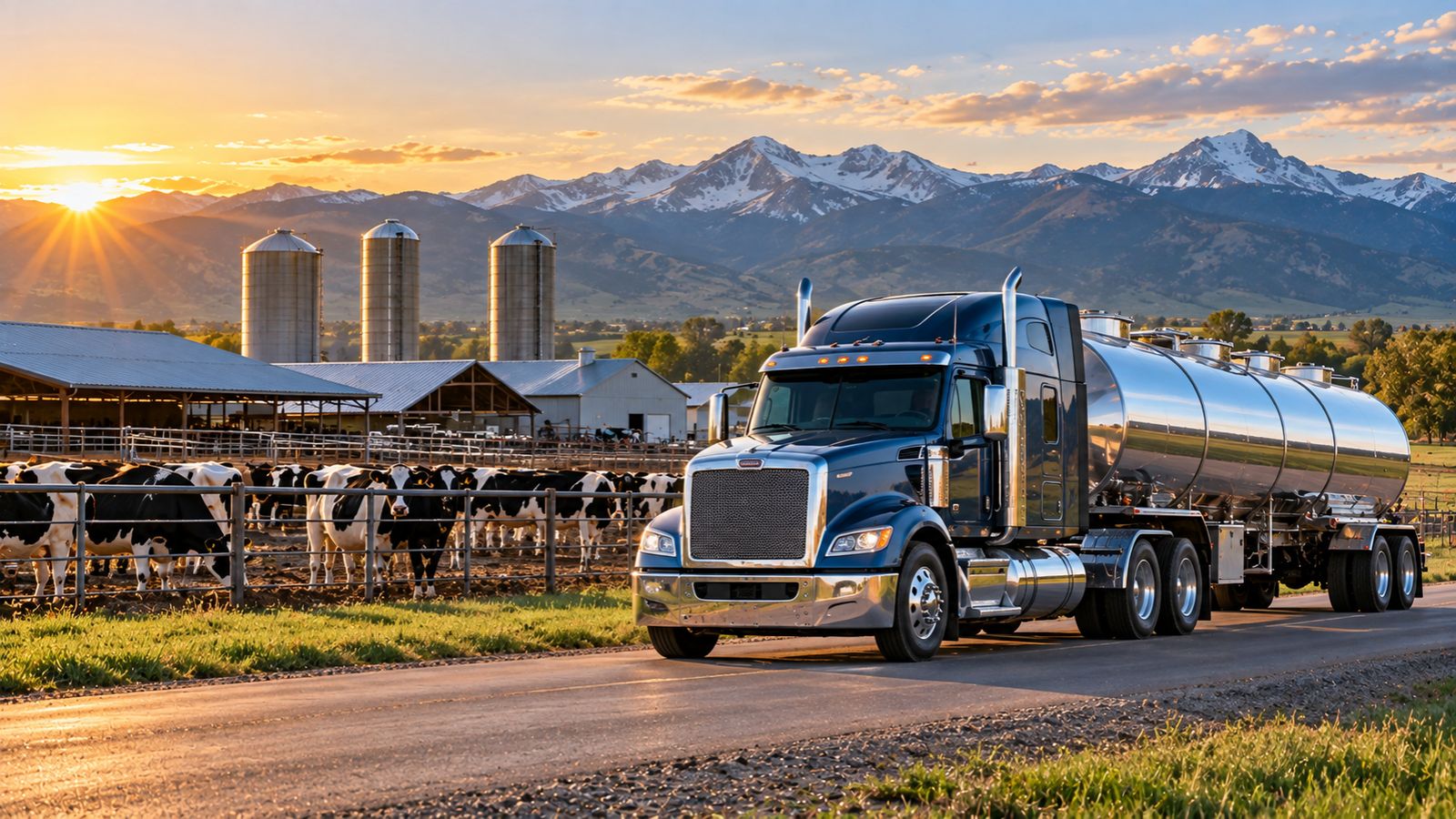
Milk Hauling Insurance in Colorado
Hauling milk is different from hauling ordinary freight.
Colorado dairy haulers operate expensive tractors and stainless steel tankers while transporting a product that can quickly lose its value after an accident or contamination event.
One serious loss can involve the truck, tanker, milk cargo, cleanup, and liability.
Your insurance should reflect those risks.
What Coverage Does a Milk Hauler Need?
A Colorado milk hauling operation may need:
- Commercial auto liability
- Motor truck cargo
- Tractor physical damage
- Milk tanker physical damage
- Pollution liability
- General liability
Make sure your insurance company knows you haul raw milk in a tanker.
Milk Cargo Insurance
Cargo coverage is especially important for dairy haulers.
An accident can cause an entire load of milk to be rejected.
Depending on the policy and cause of loss, there may also be issues involving contamination, spoilage, temperature changes, cleanup, or disposal.
Ask your agent exactly how these situations are covered.
Don’t assume a standard cargo policy automatically covers every type of milk loss.
Milk Tanker Trailer Insurance
Food-grade stainless steel tankers are expensive equipment.
Physical damage coverage can help protect an insured tanker after covered losses such as:
Collision • Rollover • Fire • Theft • Hail • Wind
Make sure the insured value reflects the actual value of your tanker.
Pumps and other permanently installed equipment should also be discussed with your agent.
Watch for Liquid Surge
Milk moves inside the tanker.
That movement can affect braking, cornering, and overall truck stability.
This becomes especially important when a tanker is partially loaded.
Experienced tanker drivers understand how surge can affect the truck on curves, grades, and during sudden braking.
Example: Colorado Milk Tanker Rollover
A milk hauler is traveling to a processing plant early in the morning.
The truck encounters slick pavement and the tanker rolls.
Now there may be:
Tractor damage. Tanker damage. Lost milk. Towing. Recovery. Cleanup.
If milk, diesel, oil, or other fluids are released, pollution-related expenses may also become an issue.
One accident can involve several different insurance coverages.
Pollution and Cleanup Coverage
Pollution coverage deserves special attention for tanker operations.
A rollover near a ditch, stream, drainage system, or other sensitive area can create expensive cleanup costs.
The release may involve milk as well as diesel fuel, oil, coolant, or other vehicle fluids.
Ask how your policy handles pollution liability, environmental cleanup, and spill response.
Colorado Roads and Weather
Colorado milk haulers can face snow, ice, high winds, freezing temperatures, mountain grades, and rapidly changing weather.
Many dairy routes also run overnight or early in the morning.
Good brakes, tires, lighting, maintenance, and experienced tanker drivers matter.
DOT Safety Matters
Agricultural trucking may qualify for certain exemptions in specific situations.
That doesn’t mean every milk truck is exempt from every DOT requirement.
Driver qualifications, inspections, maintenance, hours of service, and proper CDL endorsements can still apply depending on the operation.
Safety history can also affect insurance underwriting.
What Does Colorado Milk Hauling Insurance Cost?
There is no single price.
Insurance companies may look at:
- Driver experience
- Tanker experience
- DOT history
- Claims
- Operating radius
- Cargo limits
- Tractor values
- Tanker values
A local dairy hauler can have a very different insurance profile from a fleet operating across several states.