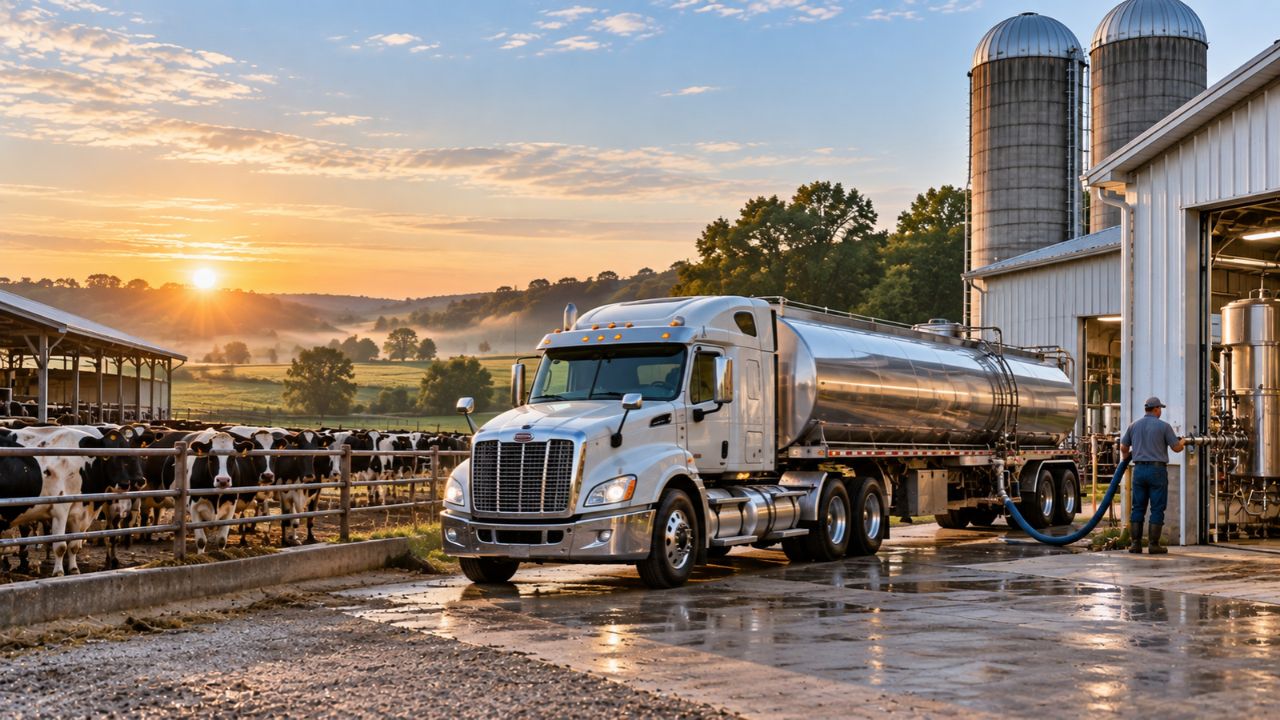
Milk Hauling Insurance in Missouri
Milk hauling is different from ordinary freight.
Missouri dairy haulers move raw milk from farms to processing facilities on tight schedules. You’re dealing with liquid cargo, specialized stainless-steel tankers, rural roads, and strict pickup times.
One accident can damage the tractor, tanker, and cargo at the same time.
Your insurance needs to match that operation.
What Coverage Do Missouri Milk Haulers Need?
Depending on the operation, coverage may include:
- Commercial auto liability
- Motor truck cargo
- Tractor physical damage
- Milk tanker physical damage
- General liability
- Pollution or cleanup coverage
Your insurance company should know you’re hauling raw milk in a food-grade tanker.
Milk Cargo Insurance
A load of raw milk can represent a significant cargo loss.
A rollover, collision, or other covered event could result in the milk being spilled or rejected.
Coverage for spoilage, contamination, temperature-related losses, rejected loads, disposal, and cleanup can vary considerably.
Ask about these exposures specifically instead of assuming standard cargo insurance covers them.
Milk Tanker Trailer Insurance
Stainless-steel milk tankers are specialized equipment.
Physical damage coverage can protect an insured tanker against covered losses such as:
Collision • Rollover • Fire • Theft • Wind • Hail
Make sure the tanker is insured at an appropriate value.
Pumps and permanently installed equipment should also be discussed with your insurance agent.
Liquid Surge Matters
Milk moves inside the tanker while the truck is traveling.
That liquid movement can affect braking, cornering, and stability, particularly when a tanker is partially loaded.
Experienced tanker drivers understand the importance of smooth braking and careful speeds on curves and rural roads.
Example: Missouri Milk Tanker Rollover
A dairy hauler is traveling from a Missouri farm to a processing facility early in the morning.
The road is wet. The truck enters a curve and the tanker rolls.
The claim could involve:
Tractor damage. Tanker damage. Lost milk. Towing. Recovery. Cleanup.
If milk, diesel, oil, or coolant reaches a ditch or waterway, additional cleanup issues may arise.
One accident can potentially involve several different insurance coverages.
Missouri Dairy Routes
Missouri milk haulers may operate on narrow rural roads before connecting with larger state highways and interstates.
Weather adds another challenge.
Heavy rain, thunderstorms, fog, winter ice, and snow can make early-morning dairy routes more difficult.
Good maintenance and experienced tanker drivers matter.
DOT Compliance Matters
Agricultural trucking may qualify for certain exemptions in specific circumstances, but exemptions aren’t universal.
Depending on the operation, requirements involving driver qualifications, CDL endorsements, hours of service, inspections, brakes, tires, lighting, and vehicle maintenance may apply.
A poor DOT safety record can also affect insurance underwriting.
How Much Does Milk Hauling Insurance Cost in Missouri?
There is no standard rate.
Insurance companies may consider:
- Driver experience
- Tanker experience
- Claims history
- DOT record
- Operating radius
- Number of trucks
- Tractor values
- Tanker values
- Cargo limits
A local dairy hauler running short farm-to-plant routes may be evaluated differently from a fleet hauling milk across multiple states.