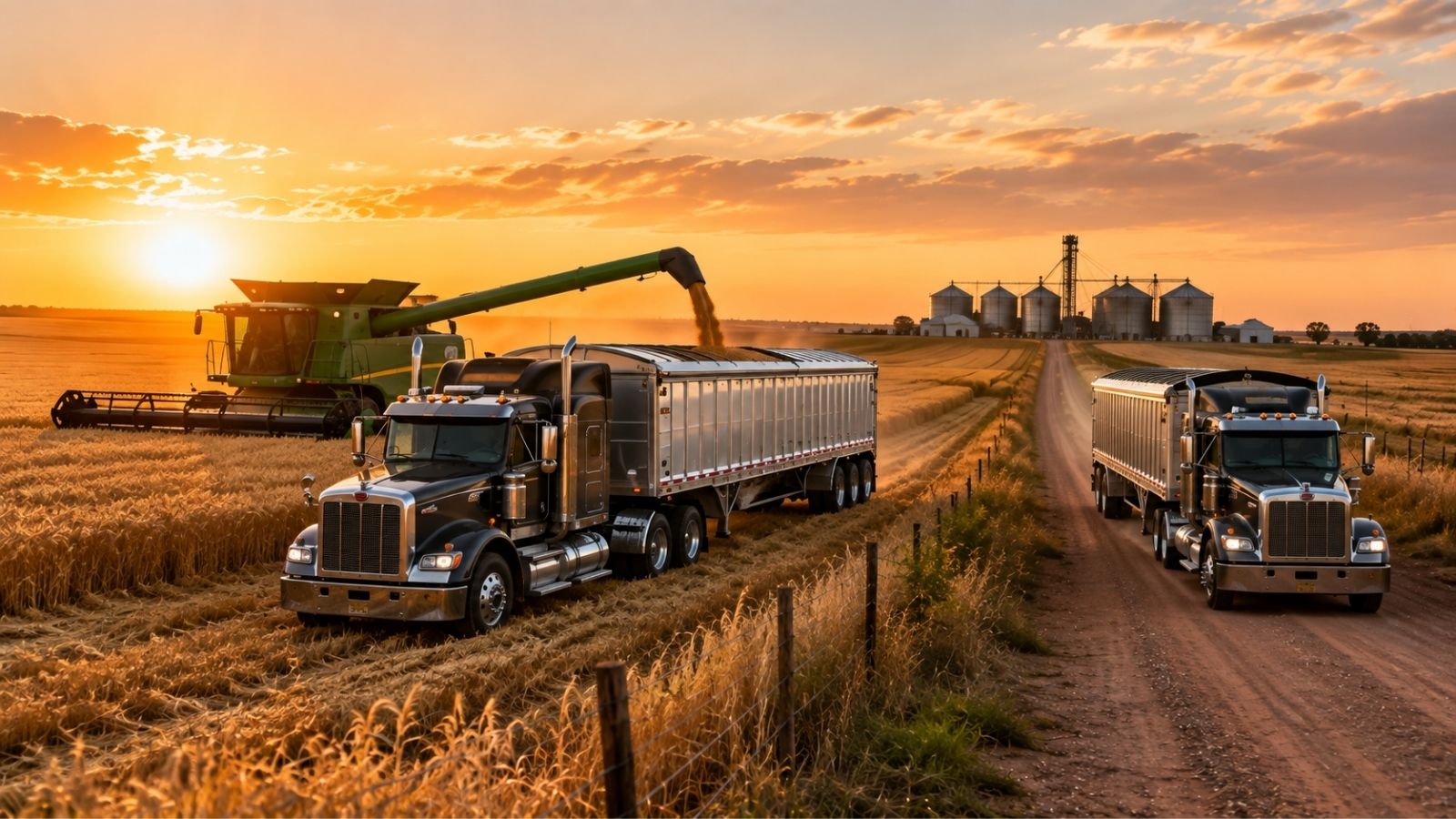
Grain Hauling Insurance in Oklahoma
Oklahoma grain hauling comes with a unique mix of risks.
You may be running wheat during harvest, hauling corn or soybeans to an elevator, or moving grain between farms, storage facilities, and processors.
The trucks are heavy. The loads can be valuable. The roads are often rural. Weather can turn fast.
That means your insurance needs to match the way you actually haul.
What Coverage Does an Oklahoma Grain Hauler Need?
Most grain hauling operations need more than one type of coverage.
A typical setup may include:
- Commercial auto liability
- Motor truck cargo
- Tractor physical damage
- Hopper bottom trailer coverage
- General liability
The exact mix depends on whether you haul for hire, run under your own authority, lease to another carrier, or only move your own farm commodities.
Commercial Auto Liability
Commercial auto liability is one of the main coverages for grain trucks.
It helps respond to covered bodily injury and property damage claims if your truck causes an accident.
This matters in Oklahoma because grain trucks often operate on:
- Two-lane highways
- County roads
- Farm entrances
- Elevator access roads
- Rural intersections
A serious crash involving a loaded tractor and hopper bottom can get expensive quickly.
Your liability limits also need to match any customer, broker, contract, or motor carrier requirements.
Motor Truck Cargo Insurance for Grain
Cargo insurance is important when you are hauling grain owned by someone else.
A full hopper bottom can carry a lot of commodity value.
That value changes depending on:
- The type of grain
- Market prices
- Load size
- Customer requirements
Imagine a truck hauling wheat rolls over on the way to an elevator.
The grain spills into the ditch.
Even if part of it can be recovered, it may be contaminated by dirt, fuel, water, or road debris.
That can turn into a significant cargo claim.
Make Sure Your Cargo Limit Is High Enough
Do not assume the cargo limit you picked years ago still works today.
Commodity values move.
Ask yourself two questions:
What is a normal load worth?
What is the most expensive realistic load I could haul?
That second number is the one worth comparing to your cargo limit.
Also review deductibles, exclusions, contamination provisions, and commodity restrictions.
Hopper Bottom Trailer Insurance
Your hopper bottom trailer is a major investment.
Physical damage coverage can help protect it from covered losses such as:
- Collision
- Rollover
- Hail
- Wind
- Fire
- Theft
Make sure the trailer value listed on the policy is realistic.
Underinsuring the trailer to save premium can create a problem after a total loss.
Tractor Physical Damage Coverage
Liability insurance does not normally pay to repair your own tractor after an at-fault accident.
That is where physical damage coverage comes in.
Collision coverage generally applies to covered crashes and rollovers.
Comprehensive coverage generally applies to other covered losses such as hail, fire, theft, vandalism, or wind.
In Oklahoma, hail and severe storms make this especially important.
Oklahoma Weather Can Be Hard on Grain Trucks
Oklahoma weather can change fast.
Grain haulers may deal with:
- High winds
- Hail
- Thunderstorms
- Heavy rainIce
- Tornado risk
Empty hopper bottoms can also be more sensitive to strong crosswinds.
Drivers need to be careful on soft shoulders, muddy farm roads, and rural routes after heavy rain.
Insurance helps after a covered loss.
Good operating decisions help keep the loss from happening.
Harvest Season Brings More Risk
Harvest season can mean long days and a lot of short trips.
Drivers may make repeated runs between fields, farms, elevators, and storage facilities.
That can mean more exposure to:
- Dust
- Slow farm equipment
- Tight entrances
- Long elevator lines
- Driver fatigue
- Busy rural intersections
Pre-trip inspections still matter.
So do brakes, tires, lights, and hours-of-service compliance.
A truck that runs hard during harvest needs maintenance that keeps up with the workload.
Example Oklahoma Grain Hauling Claim
A driver is hauling wheat to a local elevator.
At a rural intersection, another vehicle pulls out.
The driver takes evasive action and drops onto a soft shoulder.
The tractor and hopper bottom roll.
Now there may be several claims at once:
The tractor is damaged.
The trailer is damaged.
The grain is contaminated.
There may also be damage to another vehicle, fence, sign, or roadside property.
Depending on the policy and facts, commercial auto liability, physical damage, trailer coverage, and motor truck cargo may all come into play.
That is why it matters to know what your policy actually covers.
DOT Compliance Still Matters
Agricultural trucking can involve special rules and exemptions, but hauling farm commodities does not automatically exempt a truck from every DOT requirement.
The rules can depend on:
- Vehicle size
- Operating radius
- Interstate or intrastate travel
- Commodity
- Type of operation
- Specific agricultural exemptions
Roadside inspection history can also matter to insurance companies.
Repeated brake, tire, lighting, or hours-of-service violations may make an operation harder to insure.
What Does Grain Hauling Insurance Cost in Oklahoma?
There is no flat price.
Insurance companies may look at:
- Number of trucksDriver experience
- CDL history
- Claims history
- DOT safety record
- Operating radius
- Cargo limits
- Tractor values
- Trailer values
- Commodities hauled
A one-truck local owner-operator is not rated the same as a larger fleet running across Oklahoma, Kansas, Texas, Arkansas, and other states.
The more accurately your operation is described, the better the quote usually fits the actual risk.