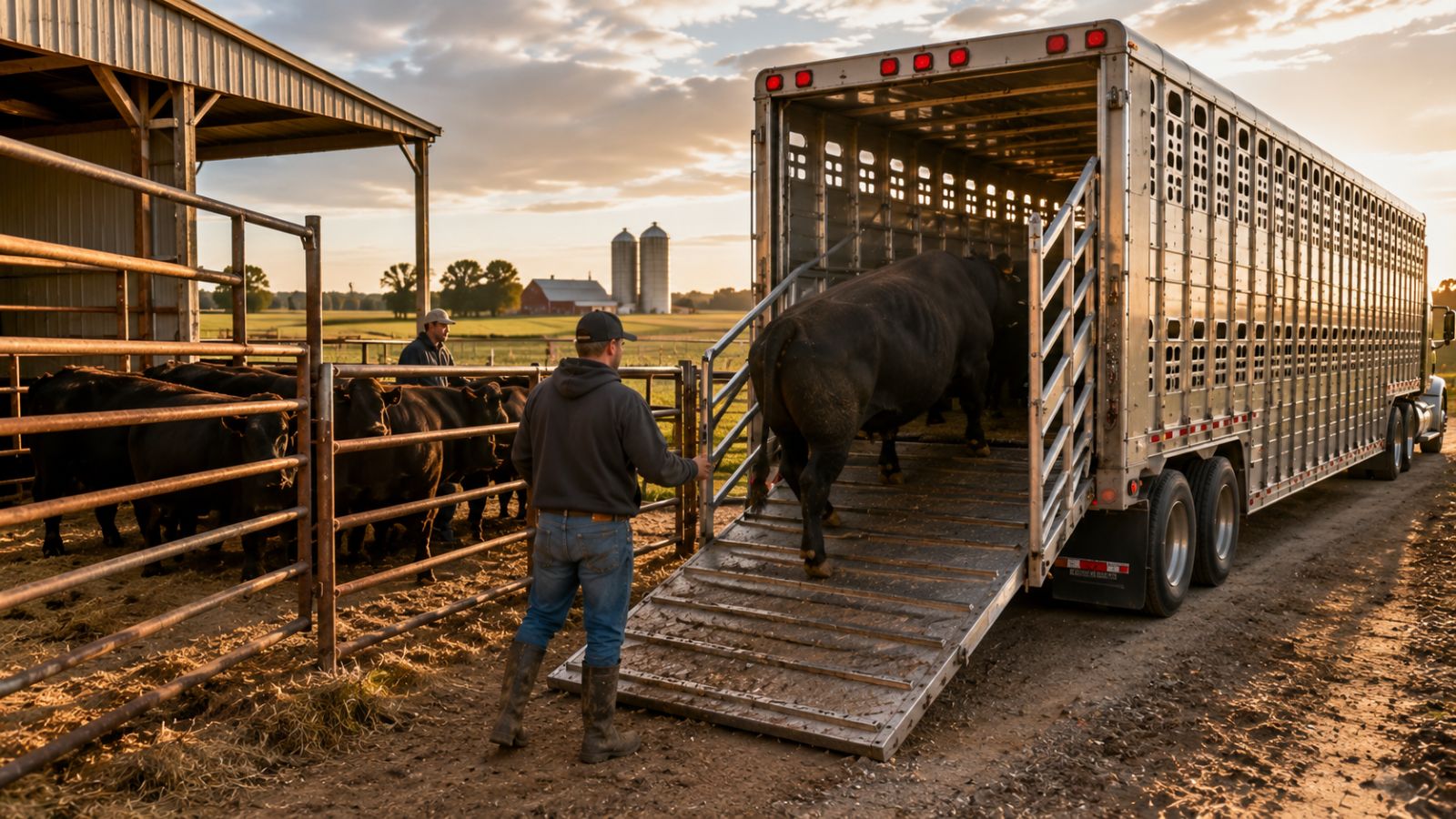
Livestock Hauling Insurance in Illinois
Livestock hauling insurance in Illinois needs to protect an operation that looks very different from general freight. Cattle and hog haulers aren’t moving pallets or boxed products. They’re transporting live animals between farms, sale barns, livestock facilities, feed operations, and processing plants.
That creates insurance questions involving animal mortality, livestock cargo values, loading and unloading, trailer damage, accidents, and cleanup.
For an Illinois owner-operator or livestock trucking fleet, simply having a cargo limit on the certificate isn’t enough. You need to understand what the policy actually does when animals are injured or killed.
Livestock Hauling Is Different From General Freight
Live animals can shift inside a trailer. They can become injured during an accident, and losses don’t always happen immediately.
A livestock truck may also spend considerable time on rural roads and at farms where drivers deal with narrow entrances, gravel lots, mud, loading areas, gates, and other agricultural equipment.
Illinois weather adds another concern. Livestock haulers may operate through summer heat, heavy thunderstorms, strong winds, freezing rain, snow, and icy winter roads.
The truck still needs to get there safely with live cargo onboard.
Livestock Cargo Insurance Matters
Motor truck cargo coverage for livestock deserves special attention.
A standard cargo form written for general commodities may not provide the protection a cattle or hog hauler expects.
Ask specifically how the policy handles livestock.
Important issues include mortality, injury, loading and unloading, valuation, deductibles, and any restrictions on how long after an accident an animal’s death can qualify as part of the covered loss.
Watch the Mortality Language
Consider a cattle pot involved in a rollover.
Several animals die at the accident scene. Others survive but suffer serious injuries and die later.
Will the cargo policy cover those later deaths?
That depends on the policy.
Some livestock cargo forms can contain time restrictions on mortality following a covered accident. This is why reviewing the actual policy wording matters much more than simply seeing “$100,000 cargo” on a certificate.
Higher-Value Livestock Can Require Higher Cargo Limits
Not every load of cattle has the same value.
Commercial cattle, breeding stock, registered cattle, show animals, and other specialized livestock can create significantly different cargo exposures.
The same applies to hog loads. The number of animals and their value can quickly produce a substantial cargo loss.
Your cargo limit should account for the most valuable load you’re reasonably likely to transport, not just your average load.
If your customers change or you begin hauling higher-value animals, review your cargo limits before accepting those loads.
Commercial Auto Liability for Illinois Livestock Haulers
Commercial auto liability helps protect your trucking company when you’re legally responsible for covered bodily injury or property damage.
This is the core liability coverage for an interstate or intrastate trucking operation.
Loaded livestock combinations are heavy commercial vehicles. A collision on a rural Illinois highway or interstate can result in serious liability exposure, especially if multiple vehicles are involved.
Physical Damage for Your Tractor
Your tractor is one of your biggest business assets.
Physical damage coverage can protect it against covered collision and comprehensive losses.
Make sure the insured value reflects the truck you’re actually operating. This is especially important after buying newer equipment or making substantial upgrades.
Livestock Trailer Insurance
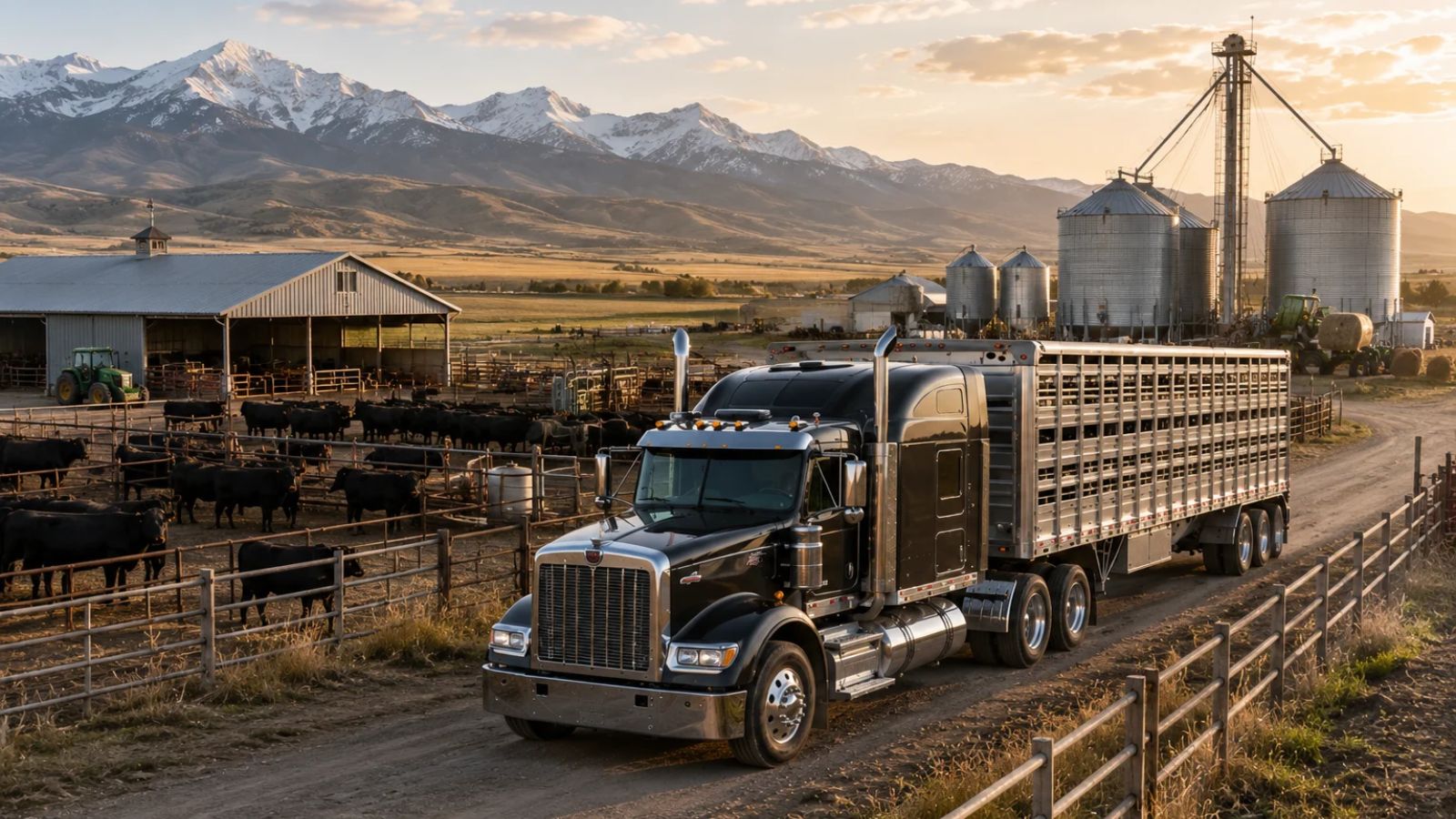
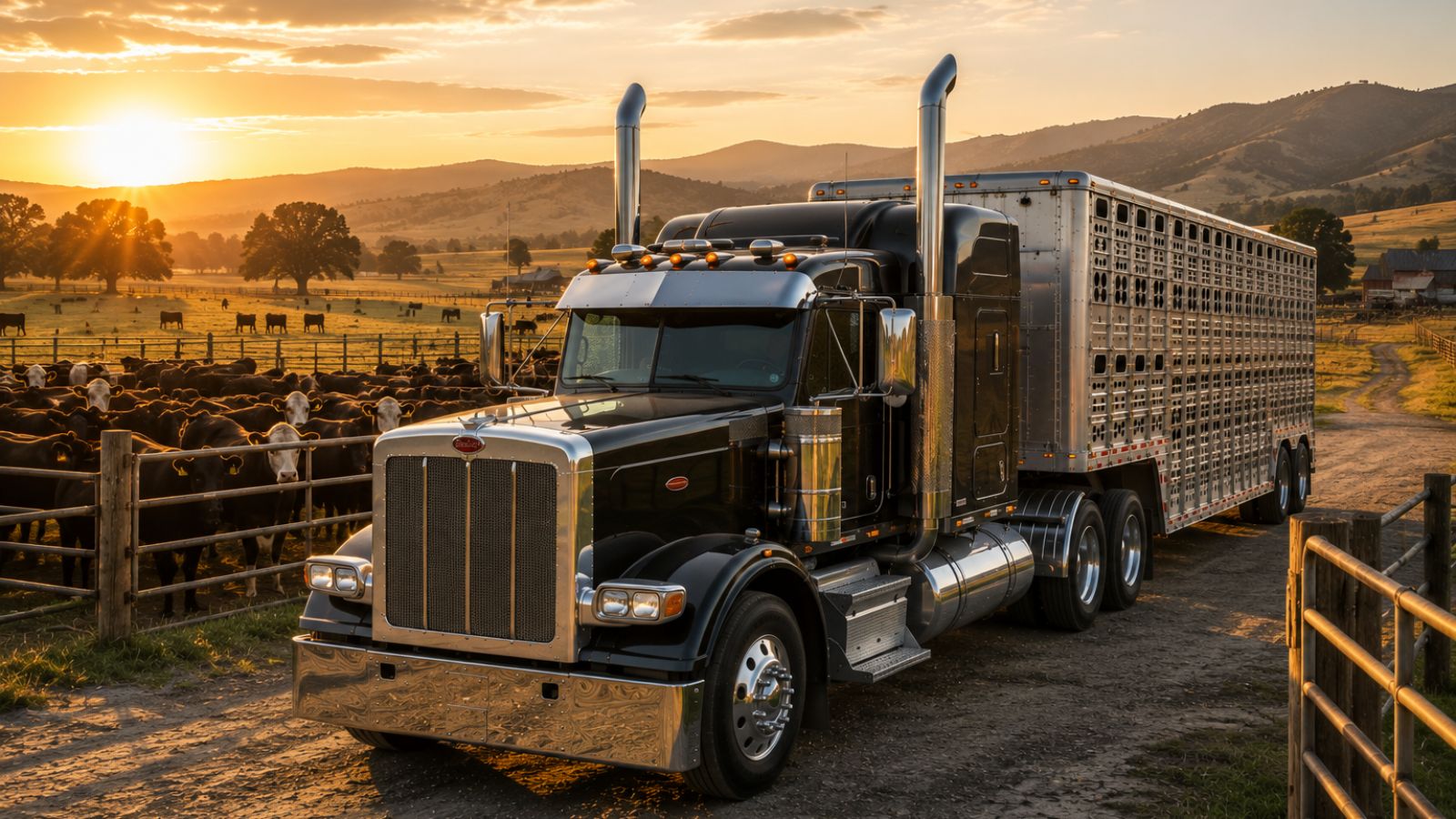
A quality aluminum livestock trailer, often called a cattle pot, represents another major investment.
Trailer physical damage coverage can protect properly scheduled equipment against covered losses involving collisions, overturns, fire, theft, and certain weather events.
Don’t forget to update trailer values as equipment changes.
The cargo and trailer are also separate exposures. Insuring the cattle doesn’t automatically insure the trailer carrying them.
A Livestock Rollover Can Become a Major Claim
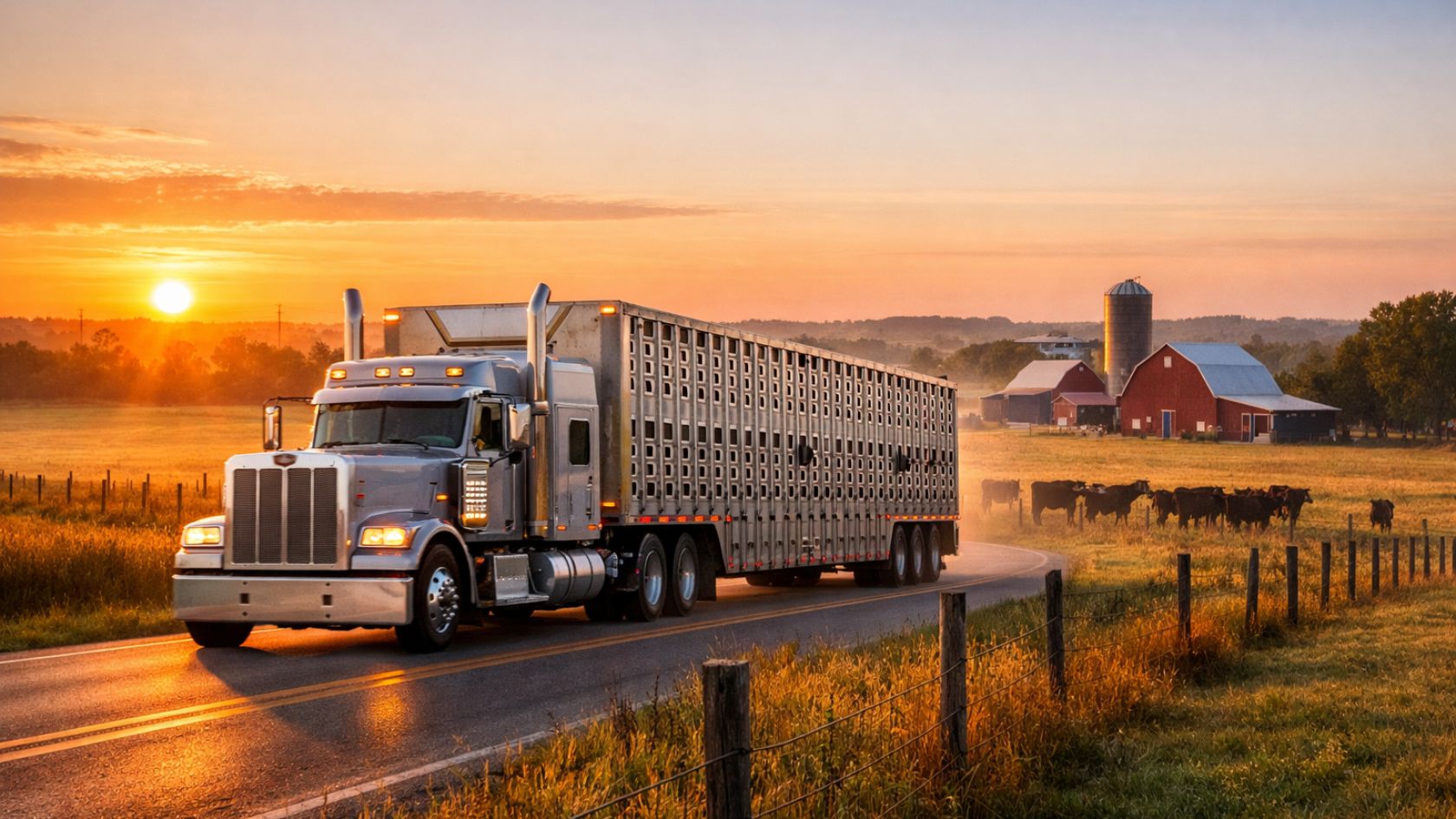
Picture a loaded livestock truck traveling through rural Illinois after a rainstorm.
The combination leaves the roadway and rolls onto its side.
The tractor suffers substantial damage. The aluminum livestock trailer is badly damaged. Some animals are killed, while others escape through damaged sections of the trailer. Fencing is damaged, and specialized recovery equipment is needed.
Now the trucking company could be dealing with tractor damage, trailer damage, livestock cargo loss, third-party property damage, towing, recovery, and potentially cleanup costs.
One accident can trigger several different portions of the insurance program.
Loading and Unloading Livestock
Not every livestock loss happens on the highway.
Loading and unloading creates its own exposure. Animals can be injured, gates can fail, and drivers may be working around unfamiliar facilities.
Ask how your cargo policy treats animals during loading and unloading.
Don’t assume coverage begins only when the trailer starts moving or that every loading-related loss is automatically covered.
The answer depends on the policy wording.
Illinois Weather and Livestock Transportation
Illinois weather can make livestock transportation challenging throughout the year.
Winter brings snow, freezing rain, and icy roads. Spring can bring heavy rain and muddy farm entrances. Summer creates heat concerns for live animals, while thunderstorms and strong winds can develop quickly.
Trailer ventilation and equipment condition matter.
Drivers should inspect trailer flooring, gates, partitions, latches, tires, brakes, lights, suspension components, and other equipment before loading.
A mechanical failure with an empty trailer is frustrating. A roadside breakdown with a full load of livestock can become an animal welfare, customer, and insurance problem very quickly.
DOT Safety Can Affect Livestock Hauling Insurance
Insurance companies look closely at trucking safety records.
Underwriters may review accidents, roadside inspections, driver records, vehicle maintenance history, claims, operating radius, and other safety information when determining whether to insure an operation and what it will cost.
Livestock trucks running demanding schedules still need proper pre-trip inspections and maintenance.
Repeated brake, tire, lighting, or driver violations can hurt your insurance options over time.
How Much Does Livestock Hauling Insurance Cost in Illinois?
There isn’t one standard price.
Insurance companies commonly evaluate fleet size, driver experience, tractor and trailer values, operating radius, states traveled, DOT history, previous losses, years in business, livestock hauled, cargo limits, and annual mileage.
A one-truck owner-operator hauling commercial cattle within Illinois won’t necessarily be priced the same as a fleet hauling cattle and hogs throughout the Midwest.
Accurately describing your operation helps insurers price the actual risk.