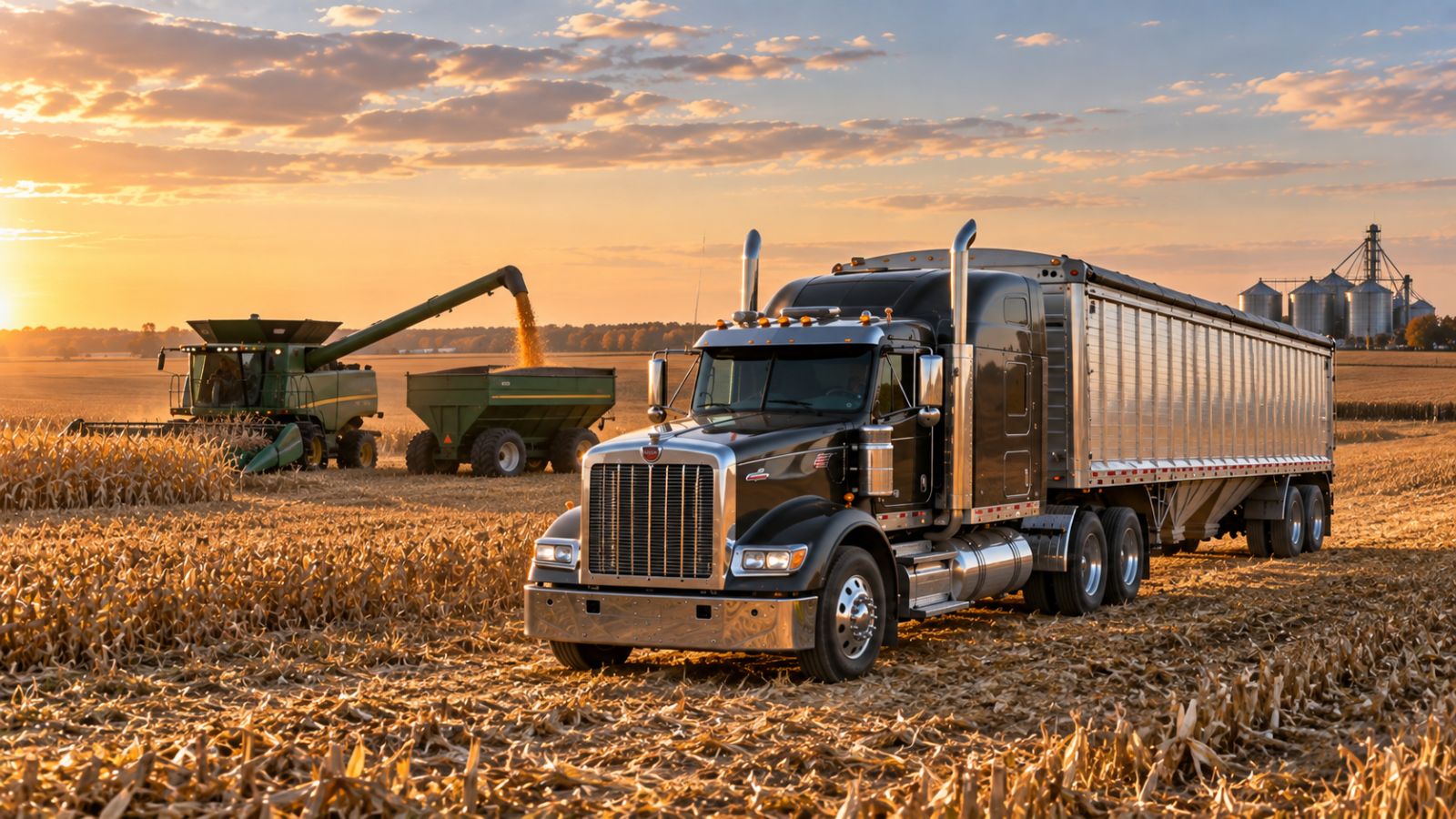
Grain Hauling Insurance in Illinois
Illinois is serious grain country.
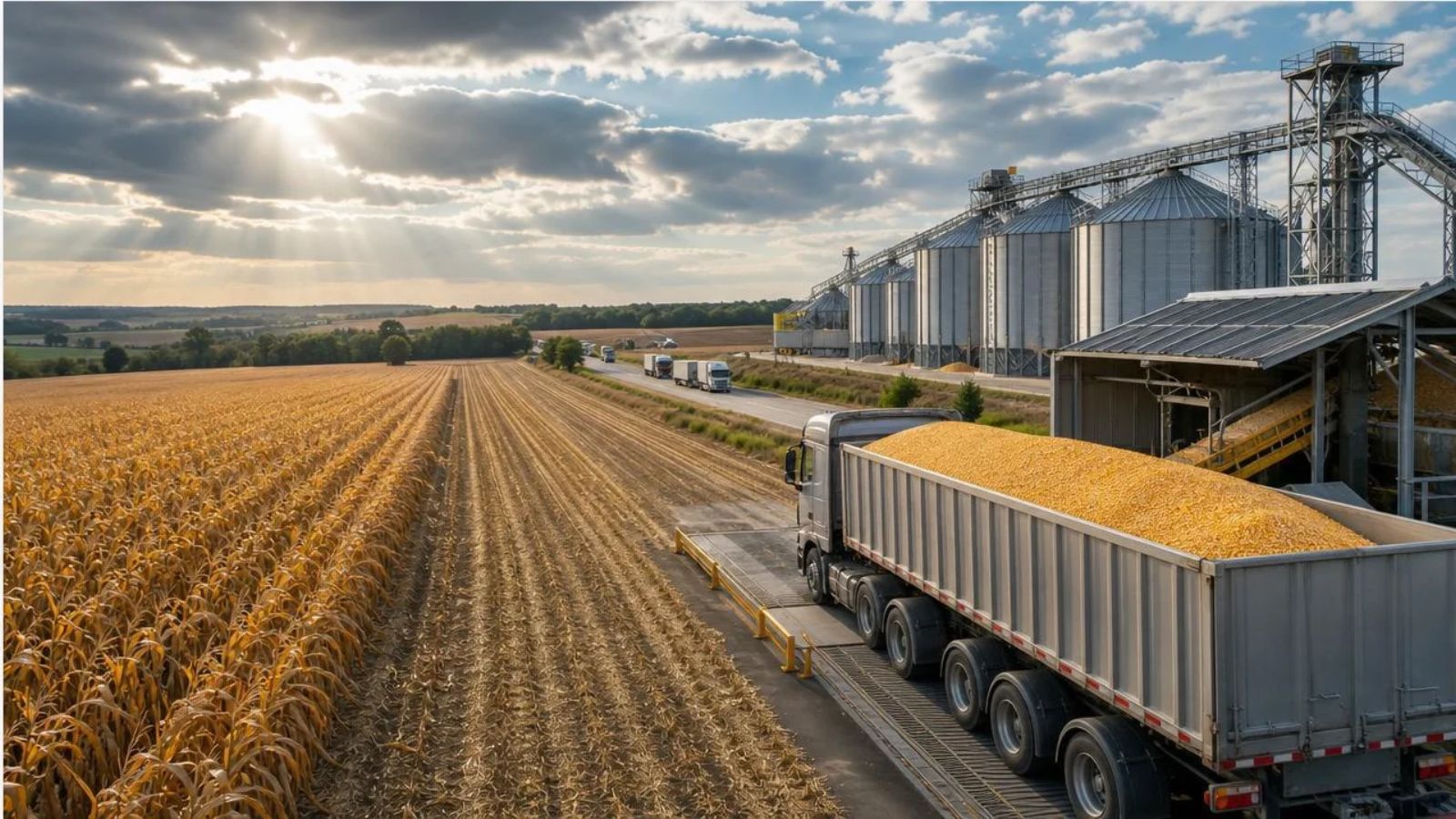
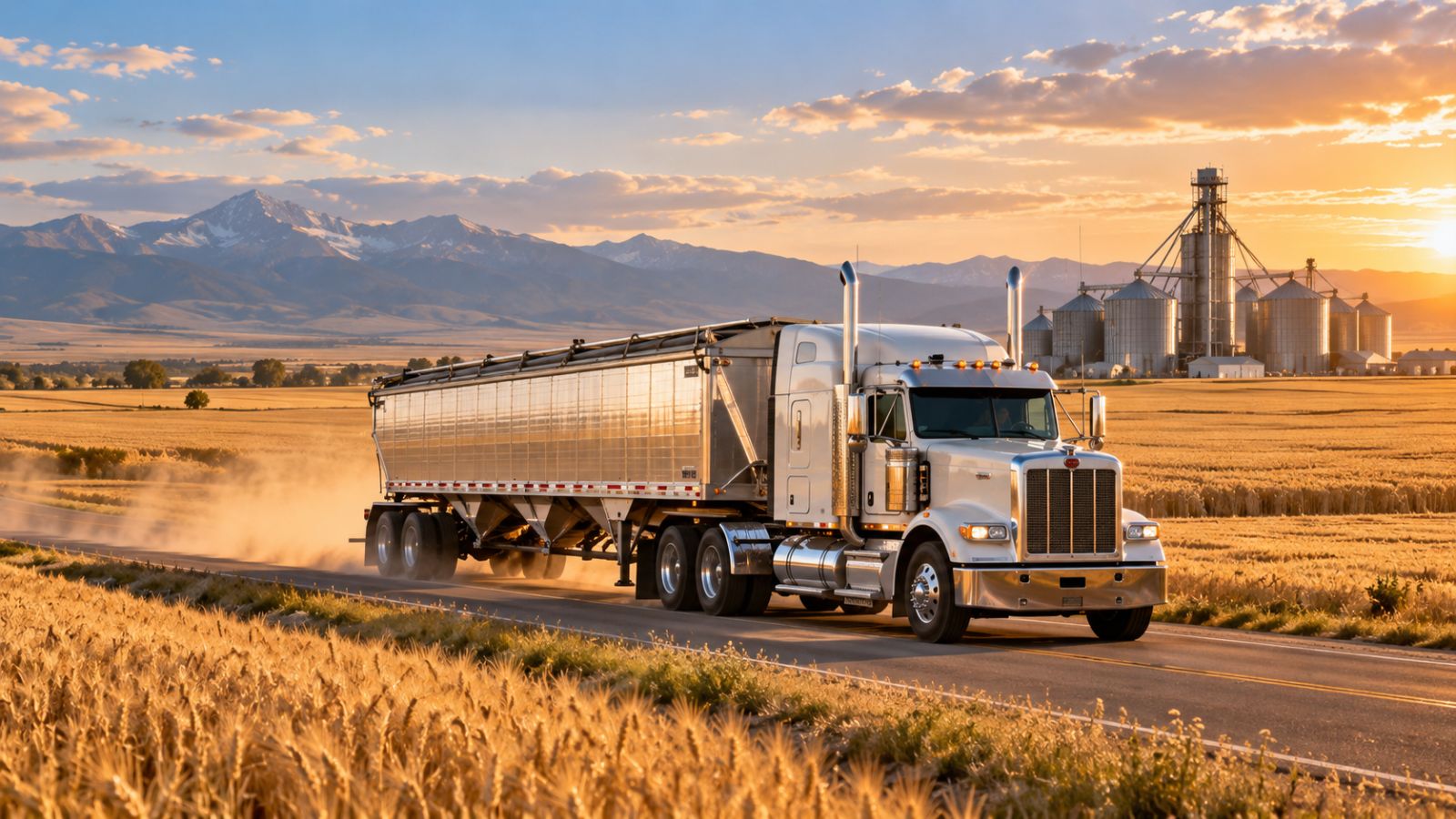
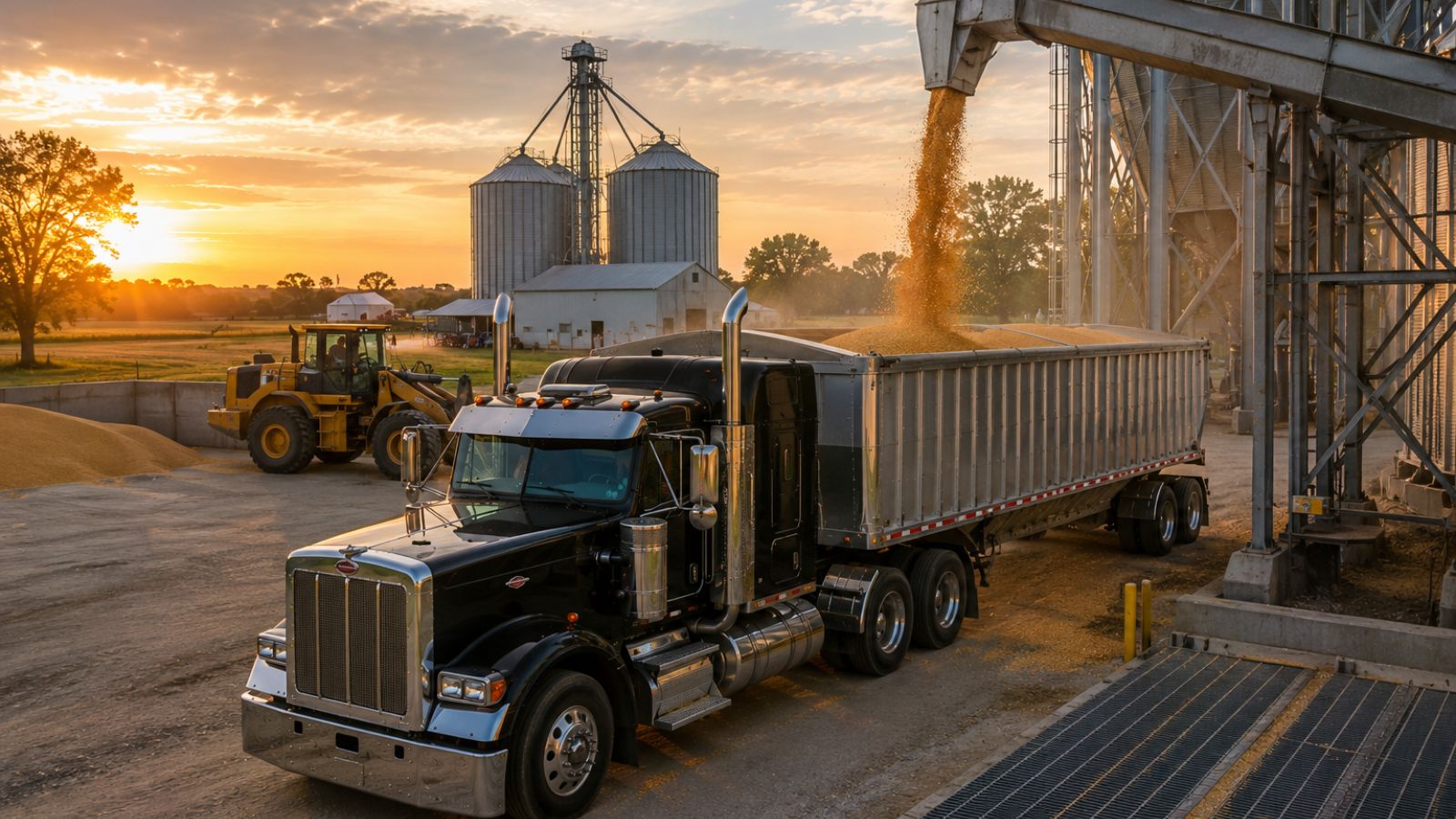
Grain haulers move corn, soybeans, wheat, and other commodities from farms to elevators, storage facilities, processors, and terminals.
That means loaded hopper bottoms, rural roads, busy harvest schedules, and expensive equipment.
One bad accident can damage the tractor, hopper bottom, and grain cargo at the same time.
Your insurance needs to be built for that risk.
What Insurance Does an Illinois Grain Hauler Need?
Most grain hauling operations need several coverages working together.
These commonly include commercial auto liability, motor truck cargo, tractor physical damage, hopper bottom physical damage, and general liability.
The right setup depends on your operation.
A one-truck owner-operator hauling locally has different needs than a fleet moving grain throughout Illinois and neighboring Midwest states.
Motor Truck Cargo Insurance for Grain
If you’re hauling grain owned by someone else, motor truck cargo insurance is important.
A full hopper bottom can carry a valuable load.
That value changes with commodity prices, the type of grain, and the amount being hauled.
Check Your Cargo Limit
Don’t choose a cargo limit based only on your average load.
Ask:
What is the most expensive load of grain I could realistically haul?
Compare that number with your current cargo limit.
Also check the policy for exclusions or restrictions involving contamination, cleanup, salvage, and specific commodities.
Hopper Bottom Trailer Insurance
Hopper bottoms aren’t cheap.
Physical damage coverage can help protect an insured trailer from covered losses involving collision, rollover, hail, wind, fire, theft, and other covered causes.
Make sure your trailer value is current.
If you buy another hopper bottom during harvest, tell your insurance agent. Don’t assume newly purchased equipment automatically has all the coverage you need.
Commercial Auto Liability
Commercial auto liability helps protect your operation when an insured truck causes covered bodily injury or property damage.
Illinois grain haulers spend plenty of time around:
- Rural intersections
- Farm entrances
- Two-lane highways
- Grain elevators
- Processing facilities
Harvest makes these areas even busier.
A fully loaded grain truck needs plenty of stopping distance. Good brakes, tires, following distance, and driver experience matter.
Example: Grain Truck Rollover
A driver is hauling corn to an Illinois elevator.
The right-side wheels drop onto a soft shoulder.
The loaded hopper bottom starts to lean and rolls.
The tractor is damaged.
The hopper bottom is damaged.
Corn spills into the ditch and becomes contaminated with dirt and debris.
One accident could potentially involve tractor physical damage, trailer physical damage, motor truck cargo, and liability coverage, depending on the policy and circumstances.
Illinois Harvest Season Risks
Harvest can mean long days and repeated trips between fields, farms, elevators, and storage facilities.
Drivers may encounter slow-moving farm equipment, dusty roads, narrow field entrances, elevator traffic, and tired drivers.
This is also when equipment gets worked hard.
Keep up with brakes, tires, lights, suspension components, and trailer maintenance even when trucks are running nonstop.
Illinois Weather Matters
Illinois grain haulers deal with thunderstorms, hail, high winds, heavy rain, snow, and ice.
Strong crosswinds can be especially dangerous with an empty hopper bottom.
Heavy rain can also create soft shoulders and muddy farm entrances.
Physical damage coverage can help after a covered loss, but safe operating decisions and good maintenance remain the first line of defense.
DOT Safety and Grain Hauling
Agricultural trucking may qualify for certain exemptions under specific circumstances.
That does not mean every grain truck is exempt from every DOT requirement.
Driver qualifications, brakes, tires, lighting, inspections, maintenance, and hours-of-service requirements can still apply depending on the operation.
A poor safety record can also affect insurance underwriting and cost.
What Does Grain Hauling Insurance Cost in Illinois?
There is no single price.
Insurance companies may look at your:
- Drivers
- DOT record
- Claims history
- Operating radius
- Cargo limits
- Tractor values
- Trailer values
- Commodities hauled
A local owner-operator is different from a fleet running Illinois, Iowa, Indiana, Missouri, and Wisconsin.
Make sure your insurance application accurately describes where you run and what you haul.