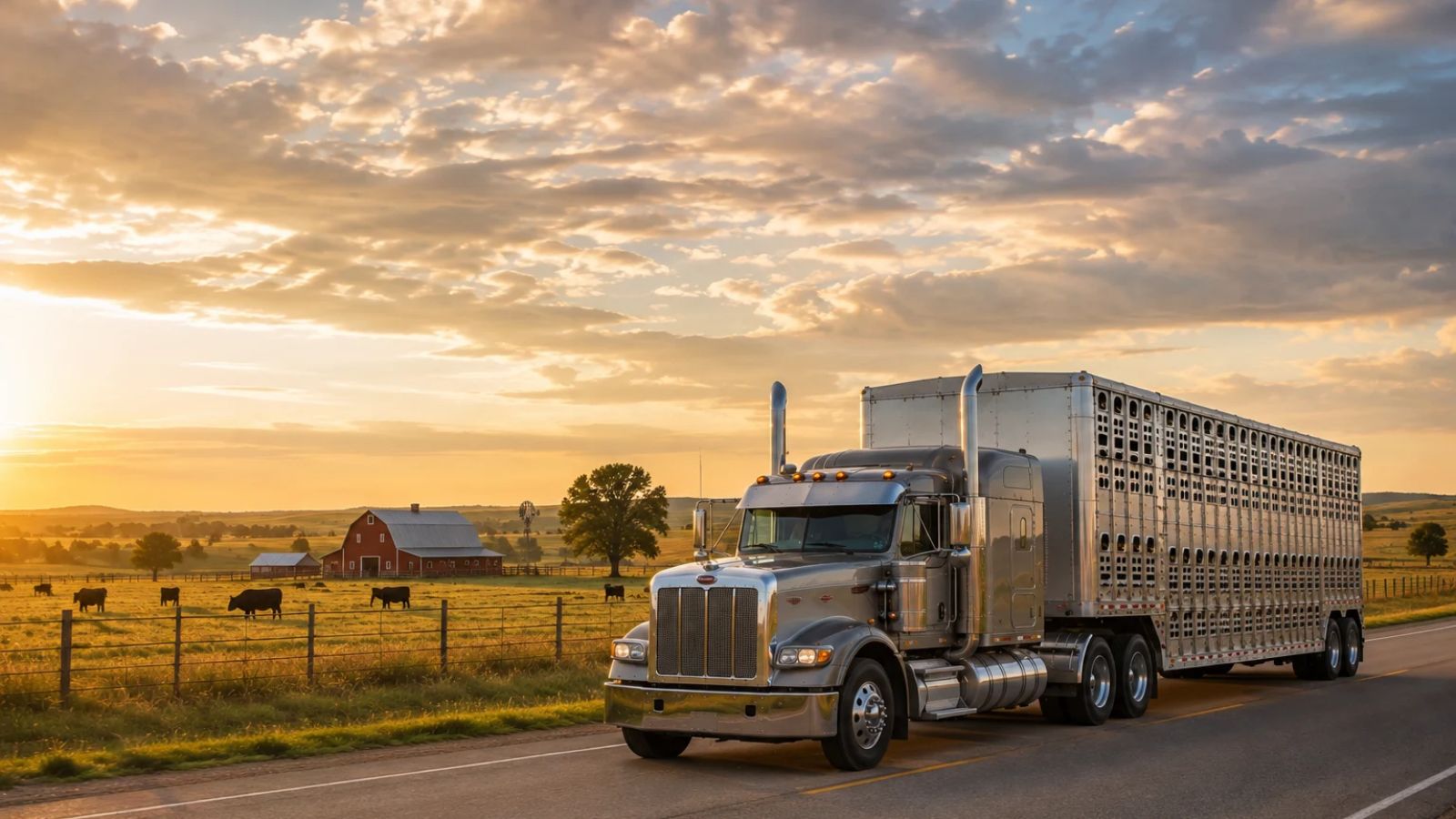
Livestock Hauling Insurance in Oklahoma
Oklahoma cattle country depends on livestock trucks. Cattle move between ranches, sale barns, backgrounding operations, feedyards, and processing facilities throughout the state. Livestock hauling insurance in Oklahoma needs to account for a risk that general freight carriers don’t have: the cargo is alive.
For livestock haulers, one of the biggest insurance concerns is not simply whether you have cargo coverage. It’s how that cargo policy treats livestock mortality after an accident.
The 24-Hour Livestock Mortality Problem
This is one of the most important details Oklahoma cattle haulers should understand.
Many livestock cargo policies contain a mortality provision that may limit coverage based on when an animal dies following a covered accident. Depending on the policy, that period may be as short as 24 hours.
Consider a cattle pot involved in a rollover.
Some cattle may die at the scene, while others survive but suffer injuries. If additional animals die later from injuries related to the wreck, whether those cattle are covered can depend on the mortality language in the policy.
A cargo certificate showing a large limit doesn’t tell you this.
You need to understand the actual policy wording.
Higher Cargo Limits Matter When Cattle Values Increase
A full cattle pot can represent a significant cargo value. That exposure becomes even greater when hauling registered cattle, breeding stock, seedstock, or other high-value animals.
Your cargo limit should reflect the maximum value you could reasonably have on the trailer at one time.
Higher limits and broader livestock mortality coverage can also help your trucking company compete for better loads. Ranchers, brokers, and livestock shippers transporting valuable cattle want to know that the carrier hauling their animals has adequate insurance.
Better coverage can help open the door to more brokers, higher-value loads, and additional revenue.
Insurance Coverage Oklahoma Livestock Haulers Should Consider
Commercial Auto Liability
Commercial auto liability protects against covered bodily injury and property damage claims when your trucking company is legally responsible for an accident.
Loaded cattle trucks are heavy vehicles, so liability losses can become expensive quickly.
Livestock Cargo Insurance
Livestock cargo coverage is one of the most important parts of the policy.
Don’t look only at the limit. Ask how the policy handles livestock mortality, injured animals, loading and unloading, valuation, deductibles, and time restrictions following an accident.
If you regularly haul expensive cattle, broader coverage may be worth the additional premium.
Physical Damage Coverage
Physical damage insurance protects your tractor against covered collision and comprehensive losses.
Make sure the insured value accurately reflects your truck, especially if you’ve recently replaced equipment or made significant upgrades.
Livestock Trailer Insurance
A good aluminum cattle pot is a major investment.
Livestock trailer physical damage coverage can protect the trailer following covered losses such as collisions, rollovers, theft, fire, and certain weather events.
General Liability
General liability can provide protection for certain business exposures outside the normal operation of your truck. The exact coverage needed depends on how your business operates at ranches, sale barns, and customer locations.
Oklahoma Livestock Hauling Risks
Oklahoma cattle haulers deal with conditions that can change quickly.
Drivers may travel narrow ranch roads, highways, and rural routes while dealing with strong winds, thunderstorms, extreme summer heat, winter ice, and rapidly changing weather.
Then there’s the cargo itself.
Cattle can move inside the trailer, affecting weight distribution. Drivers need to understand how a loaded livestock trailer responds during turns, braking, and sudden maneuvers.
Loading and unloading also require experience. Gates, trailer floors, ramps, latches, and partitions should be checked before animals are loaded.
A Livestock Claim Can Involve More Than the Cattle
Consider a cattle truck that leaves a rural Oklahoma highway and rolls onto its side.
The tractor could be damaged. The livestock trailer could be totaled. Cattle may be injured or killed. Fencing or other property could be damaged, and towing and recovery expenses could become substantial.
One wreck can involve several different portions of your insurance program.
That’s why livestock trucking companies need to look at the entire policy rather than purchasing the minimum coverage needed to get a certificate.
DOT Safety Still Affects Your Insurance
Insurance companies pay close attention to a trucking company’s safety history.
Roadside inspections, driver violations, accidents, vehicle maintenance issues, and claims history can all affect your insurance options and pricing.
Pre-trip inspections are especially important with cattle trailers. Drivers should check tires, brakes, lights, gates, latches, flooring, suspension components, and trailer condition before loading.
Breaking down with an empty cattle pot is inconvenient. Breaking down with a full load of cattle during an Oklahoma summer is a much bigger problem.
What Does Livestock Hauling Insurance Cost in Oklahoma?
There isn’t one standard price.
Insurance companies typically evaluate your number of trucks, driver experience, equipment values, operating radius, DOT history, previous claims, years in business, livestock cargo limits, and the type and value of animals you haul.
An owner-operator hauling commercial cattle locally presents a different risk than a fleet hauling high-value breeding cattle across several states.
Accurately explaining your operation is important when shopping for coverage.