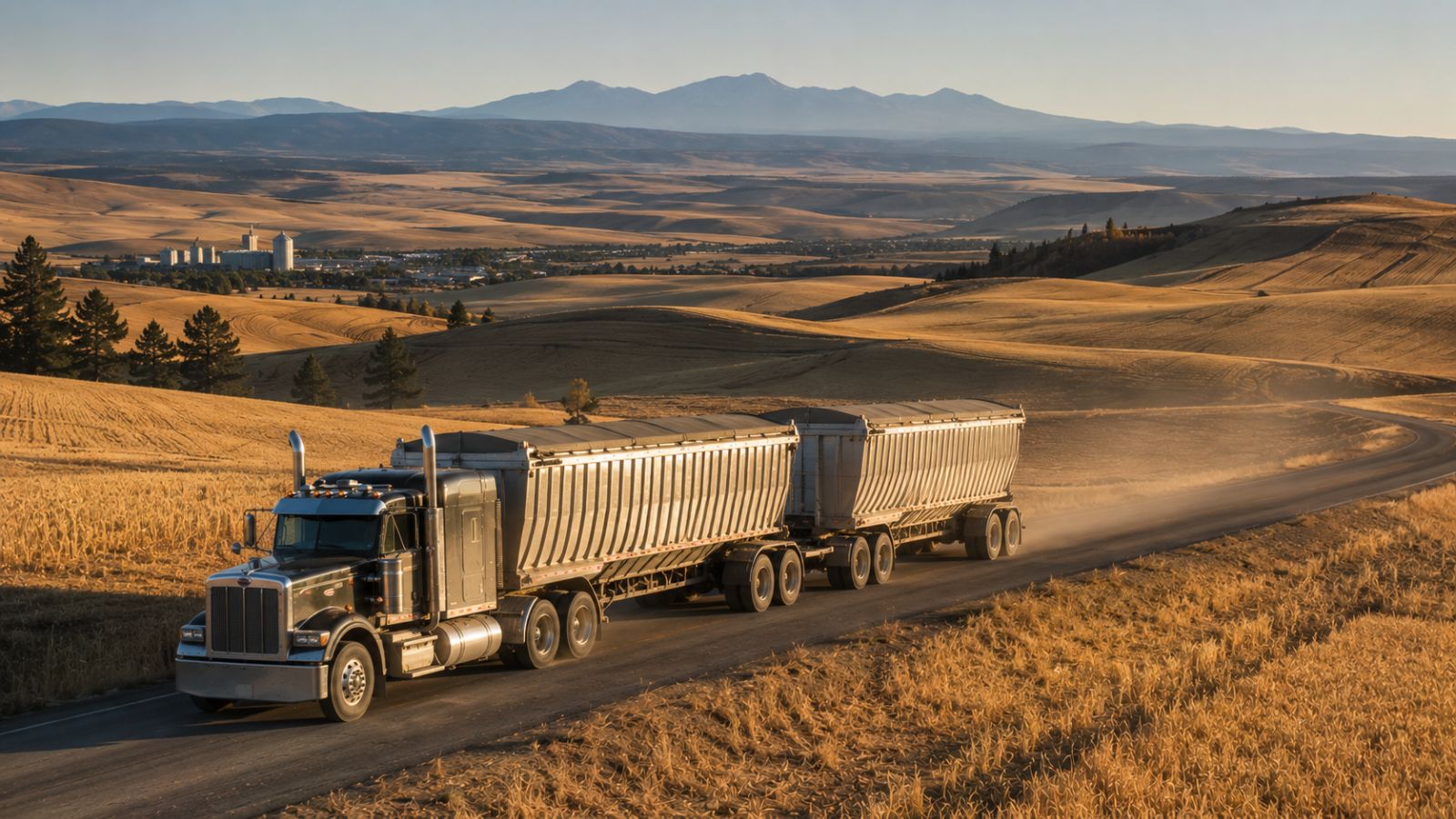
Grain Hauling Insurance in Oregon
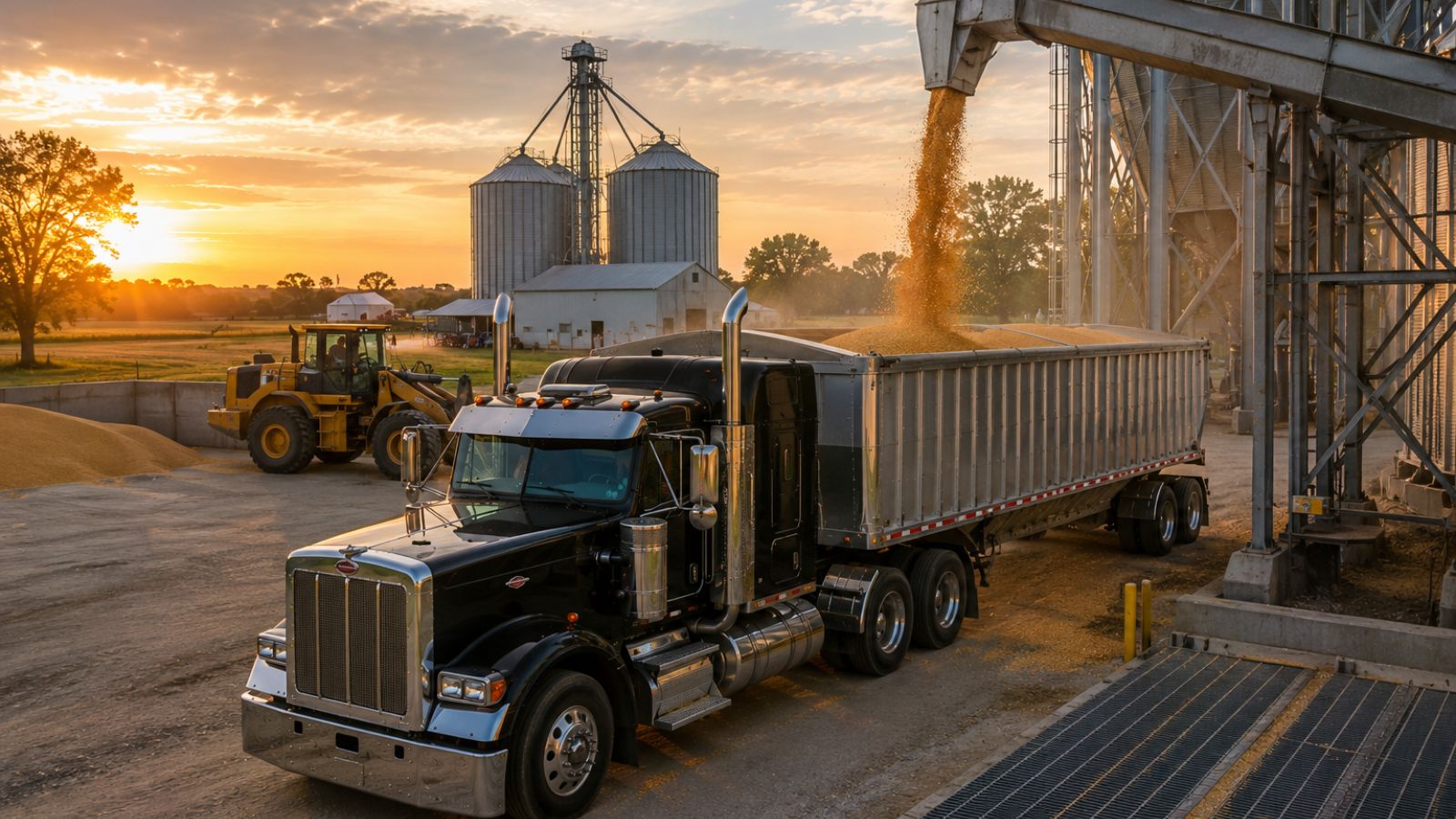
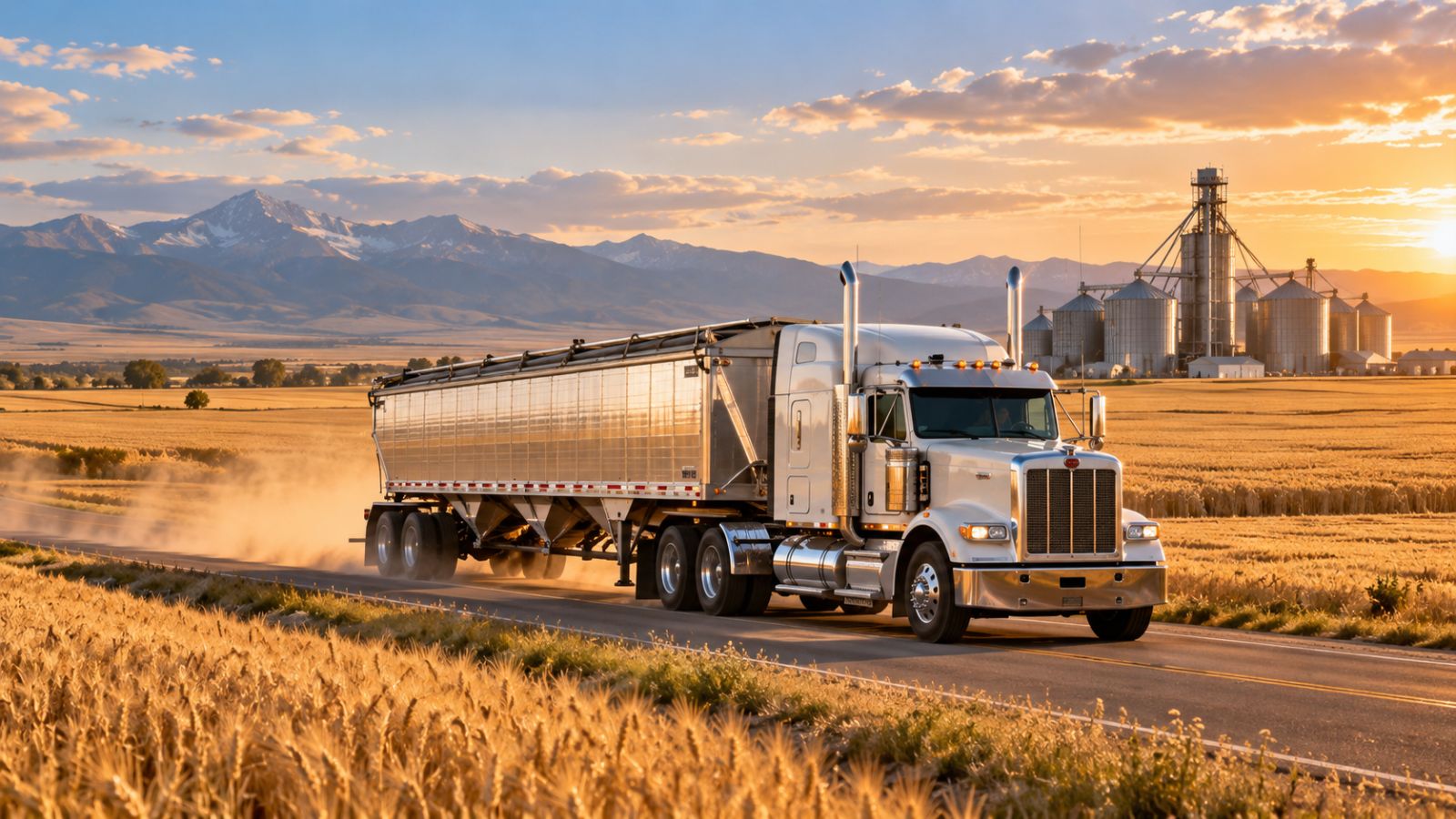
Oregon grain haulers keep wheat, barley, corn, and other agricultural commodities moving from farms to grain elevators, processors, feed operations, and storage facilities. Grain hauling insurance in Oregon needs to account for the trucks, hopper bottom trailers, cargo values, seasonal mileage, and rural driving conditions that come with agricultural transportation.
Whether you’re an owner-operator with one hopper bottom or run several trucks during harvest, your insurance should match how your grain hauling operation actually works.
Grain Hauling Is Different From General Freight
Grain hauling comes with its own set of risks.
During harvest, trucks may run longer hours and make repeated trips between fields, farms, elevators, and storage facilities. Drivers regularly operate on rural roads and enter busy grain facilities where multiple trucks may be loading and unloading at the same time.
Cargo values also change.
A trailer carrying grain can represent a significant amount of money, and commodity prices fluctuate throughout the year. Your cargo limit should be high enough to cover the maximum value you’re likely to have in the trailer.
Common Grain Hauled in Oregon
Wheat
Wheat is a major commodity for Oregon agricultural trucking operations. Grain haulers move loads from farms and storage facilities to elevators, mills, processors, and other destinations.
Barley
Barley is another commodity Oregon grain truckers may transport for livestock feed, processing, storage, and other agricultural uses.
Corn
Depending on the operation and region, carriers may haul corn to feed operations, grain facilities, and processors.
Other Agricultural Commodities
Some hopper bottom operators haul more than grain. Depending on the trailer and customer, an operation may transport feed ingredients, seeds, or other dry agricultural commodities.
Make sure your insurance company knows everything you regularly haul.
Important Insurance Coverage for Oregon Grain Haulers
Commercial Auto Liability
Commercial auto liability helps protect your business when a covered accident results in bodily injury or property damage to someone else.
Loaded grain trucks are heavy commercial vehicles. Rural roads, intersections, steep grades, and highway travel all create liability exposures.
Physical Damage
Physical damage coverage helps protect your tractor against covered collision and comprehensive losses.
The value listed on your policy should accurately reflect your equipment. Undervaluing a truck to save premium can create problems when a major loss occurs.
Motor Truck Cargo Insurance
Motor truck cargo insurance protects covered commodities while they’re in your care.
Grain haulers should pay close attention to cargo limits. If commodity prices increase or you begin hauling higher-value products, an old cargo limit may no longer be enough.
Also review exclusions and deductibles instead of looking only at the limit shown on your certificate.
Hopper Bottom Trailer Insurance
Hopper bottom trailers are essential equipment for many grain hauling businesses.
Physical damage coverage can protect a scheduled trailer from covered losses involving collisions, theft, fire, and certain weather events.
Make sure the insured value reflects what it would realistically cost to replace your trailer.
General Liability
General liability can provide protection for certain business-related claims outside normal vehicle operation. The coverage needed depends on your specific operation and contracts.
Oregon Grain Hauling Risks
Oregon grain haulers operate in conditions that can vary significantly depending on location and season.
A driver may deal with steep grades, winding rural roads, rain, winter conditions, harvest dust, or long distances between facilities.
Harvest itself creates additional pressure. More agricultural equipment is on rural roads, elevators become busy, and drivers may be working demanding schedules.
Good maintenance and experienced drivers are particularly important during these high-volume periods.
Hopper Bottom Claims Can Get Expensive
A grain hauling accident doesn’t always stop with damage to the tractor.
Imagine a loaded truck rolls over on a rural road. The tractor may be heavily damaged, the hopper bottom trailer could be totaled, and thousands of dollars of grain may spill onto the roadway.
Now you potentially have several different losses from one accident:
- Tractor damage
- Hopper bottom damage
- Lost grain
- Property damage
- Towing and recovery expenses
- Potential cleanup costs
Different portions of the insurance program may respond to different parts of the claim.
That’s why it’s important to insure the entire operation rather than focusing only on commercial auto liability.
DOT Safety Matters for Grain Haulers
Insurance companies review more than your equipment.
Driver records, roadside inspections, accidents, maintenance violations, and DOT safety history can all affect underwriting.
Grain trucks running hard during harvest still need proper pre-trip inspections. Tires, brakes, lights, suspension components, and trailer equipment should be checked before the truck leaves.
One preventable roadside violation may seem small, but repeated violations can create bigger insurance and compliance problems.
What Does Grain Hauling Insurance Cost in Oregon?
There is no single price for grain hauling insurance.
Insurance companies typically consider factors such as your number of trucks, equipment values, driver experience, operating radius, DOT history, previous claims, years in business, cargo limits, annual mileage, and commodities hauled.
An owner-operator hauling locally with one hopper bottom will be priced differently than a fleet running interstate routes throughout the Northwest.
Why Specialized Grain Hauling Insurance Matters
A grain hauling operation shouldn’t automatically be treated like a dry van trucking company.
Your business may involve seasonal mileage, rural roads, farm pickups, hopper bottom trailers, fluctuating commodity values, and increased activity during harvest.
Working with an insurance agency that understands agricultural trucking makes it easier to explain those exposures correctly to the insurance company.