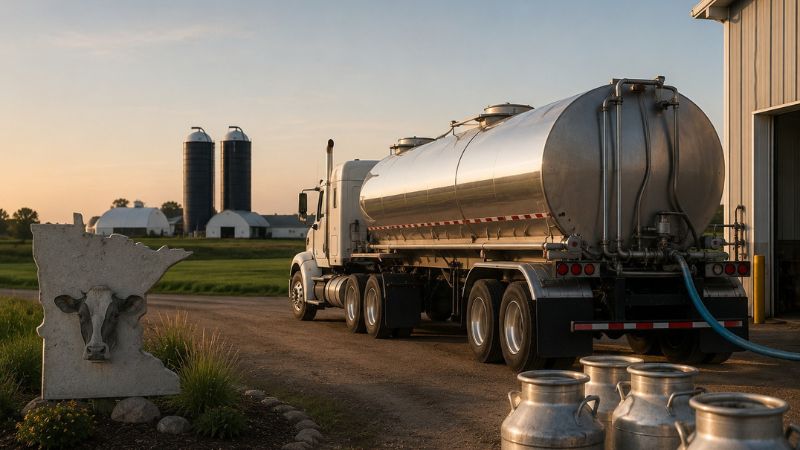
Minnesota is one of the largest dairy-producing states in the Midwest, and milk hauling plays a major role in keeping dairy operations moving every day. From small owner operators hauling raw milk between farms and processors to larger tanker fleets servicing multiple counties, milk haulers deal with unique insurance risks that standard trucking policies often do not fully address.
Milk hauling is different from dry van freight or even grain hauling. Tanker surge, food-grade contamination exposure, strict sanitation requirements, and rural winter driving conditions all create higher liability risks. A single claim involving spoiled milk, rollover damage, or a DOT violation can shut down operations quickly.
If you haul milk in Minnesota, having the right trucking insurance matters just as much as having the right equipment.
Coverages Minnesota Milk Haulers Should Carry
Milk hauling operations usually require more than a basic liability policy.
Primary Liability Insurance
Primary liability coverage protects against bodily injury and property damage if your truck causes an accident. Most milk haulers operating under federal authority carry at least $1 million in liability coverage due to tanker exposure and shipper requirements.
Many dairy processors will not work with carriers carrying lower limits.
Motor Truck Cargo Insurance
Cargo insurance for milk hauling needs to address food-grade exposure and contamination risks.
Some policies exclude contamination losses unless specifically added. That becomes a major issue in milk transportation because rejected loads are one of the most common claims.
Cargo coverage may help pay for:
- Spoiled milk
- Contaminated loads
- Cargo overturn losses
- Refrigeration breakdown exposure
- Cleanup costs after accidents
Always review contamination exclusions carefully.
Pollution and Cleanup Coverage
Milk spills may not sound hazardous, but cleanup costs after tanker accidents can become expensive quickly.
Environmental cleanup, roadway cleanup, and drainage contamination can all trigger major bills after an accident. Some standard trucking policies provide little or no pollution protection.
Milk haulers should review:
- Limited pollution liability
- Sudden and accidental pollution coverage
- Cleanup reimbursement limits
Common Milk Hauling Claims in Minnesota
Minnesota milk haulers deal with several recurring claim types.
Winter Rollover Accidents
Rural Minnesota roads become dangerous during snow and ice events. Tanker surge combined with slick roads creates a major rollover risk.
Many serious milk hauling claims occur during:
- Early morning farm pickups
- Rural curve navigation
- Frozen gravel roads
- Sudden braking situations
Cargo Contamination Claims
Improper washout procedures or equipment failures can contaminate raw milk loads.
Even small contamination issues can lead to:
- Entire load rejection
- Processor penalties
- Lost milk value
- Cleanup expenses
- Reputation damage
Food-grade tanker operations require strict cleaning documentation and maintenance records.
How Much Does Minnesota Milk Hauling Insurance Cost?
Milk hauling insurance costs vary based on several factors.
Insurance companies typically look at:
- Years of tanker experience
- Fleet size
- Minnesota driving radius
- Loss history
- Driver MVRs
- Truck values
- Trailer values
- Cargo limits
- DOT safety scores
Owner operators hauling milk in Minnesota often pay more than standard dry van operators because tanker hauling carries greater accident exposure.
New ventures usually pay the highest rates, especially without prior tanker experience.
Insurance Tips for Minnesota Milk Haulers
Milk haulers can improve insurance pricing and reduce claim exposure by focusing on safety and documentation.
Some practical steps include:
- Keep detailed washout records
- Train drivers on tanker surge handling
- Maintain strong brake inspection schedules
- Use dash cameras
- Document preventive maintenance
- Monitor CSA scores regularly
- Avoid hiring drivers with recent major violations
Insurance underwriters pay close attention to operational discipline in food-grade hauling.