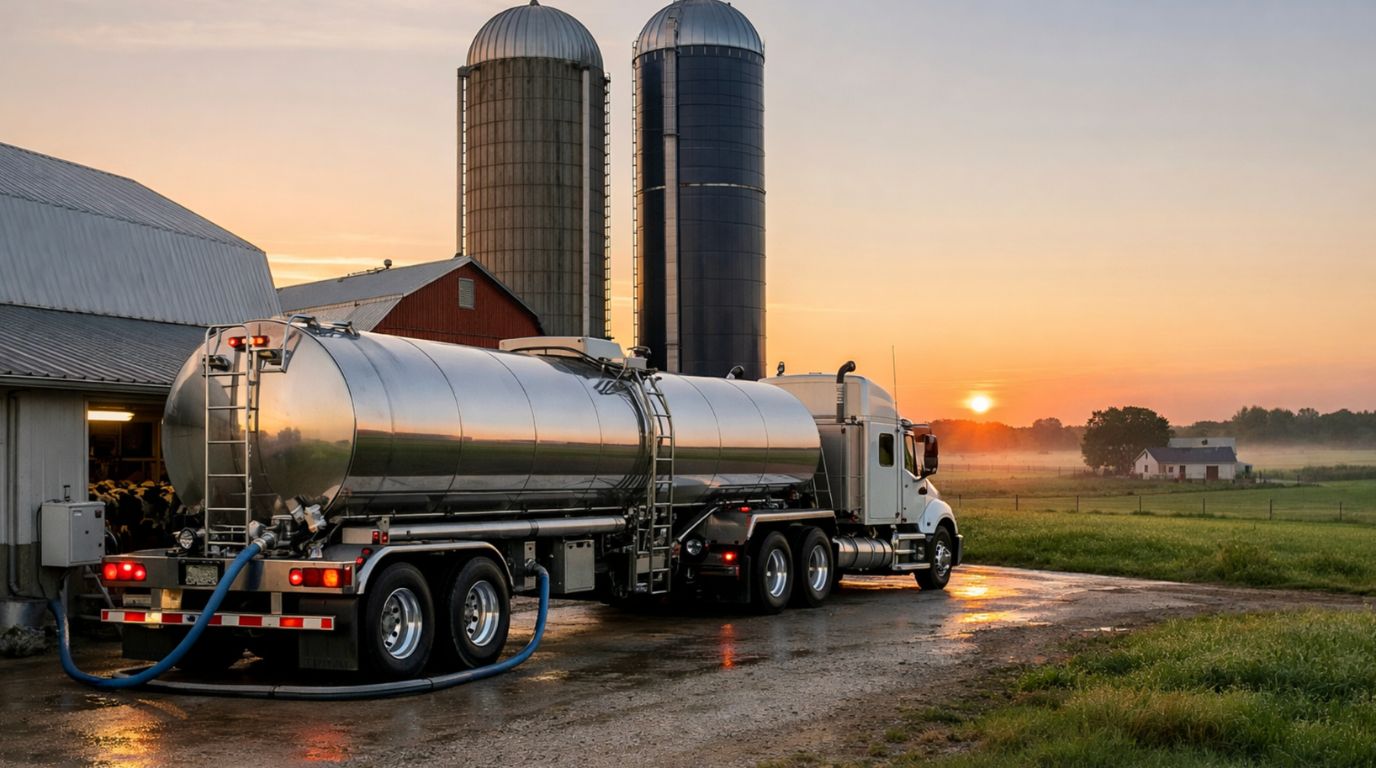
Milk Hauling Insurance in Illinois
Illinois dairy farms and processors depend on reliable milk haulers to keep raw milk moving every day. For trucking companies handling this specialized freight, milk hauling insurance in Illinois needs to account for more than just the truck itself. Tanker values, perishable cargo, contamination concerns, and tight pickup schedules all create risks that aren’t common in general freight trucking.
Whether you operate one milk tanker or manage a fleet serving dairy farms across Illinois and neighboring states, the right coverage can help protect your equipment, cargo, and business when something goes wrong.
Why Milk Hauling Has Unique Insurance Risks
Milk isn’t like hauling grain, feed, or packaged freight. It’s a perishable food product that must be handled carefully from the time it leaves the farm until it reaches the processor.
A tanker accident can result in more than damage to the truck. An entire load of raw milk could be rejected or lost. Contamination, equipment problems, or certain temperature-related issues can also create expensive cargo claims.
One important detail is that not every cargo policy handles spoilage, contamination, or temperature-related losses the same way. Milk haulers should understand exactly what triggers coverage instead of assuming every rejected load will automatically be paid.
Common Milk Hauling Operations in Illinois
Farm-to-Processor Milk Hauling
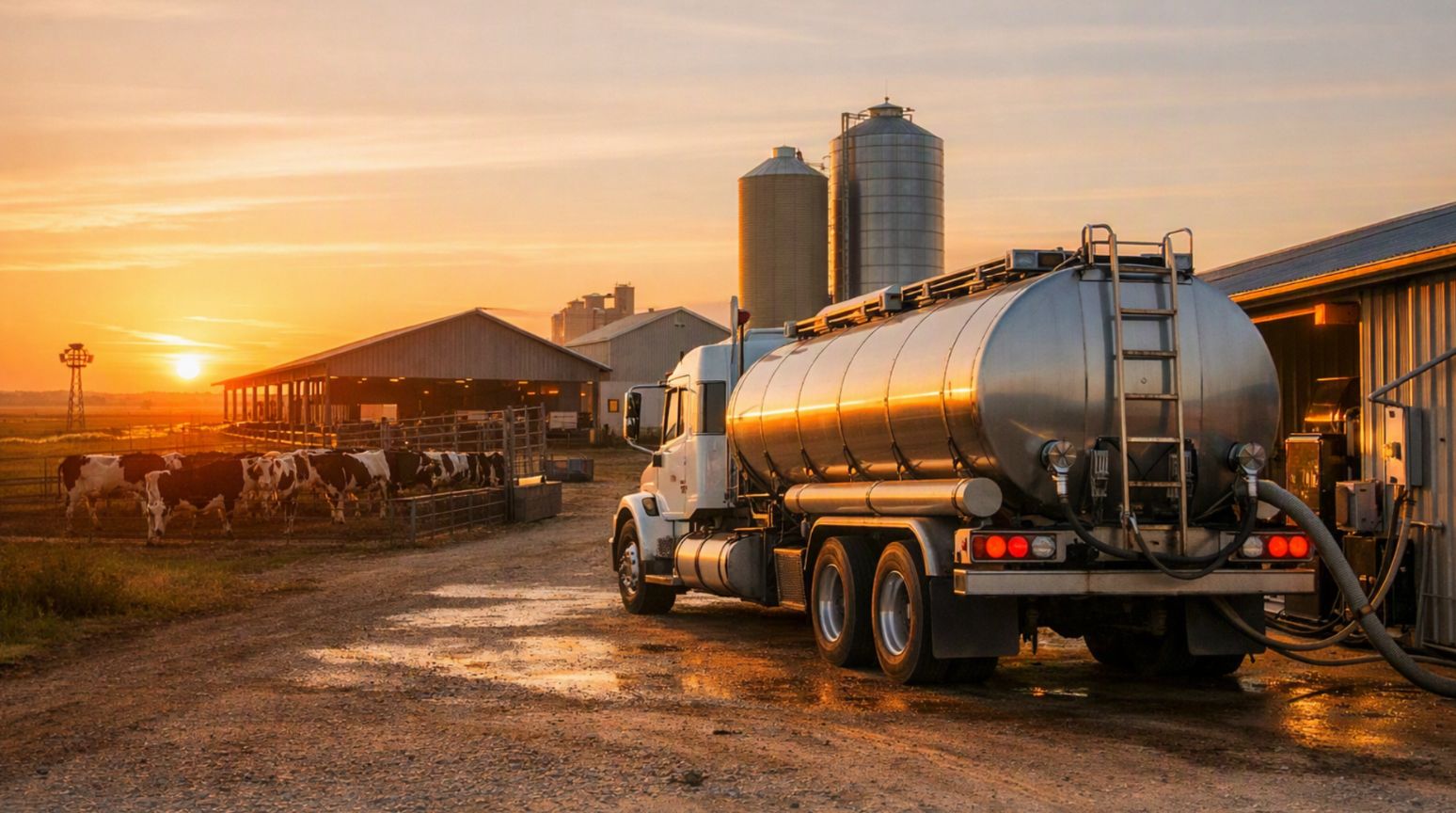
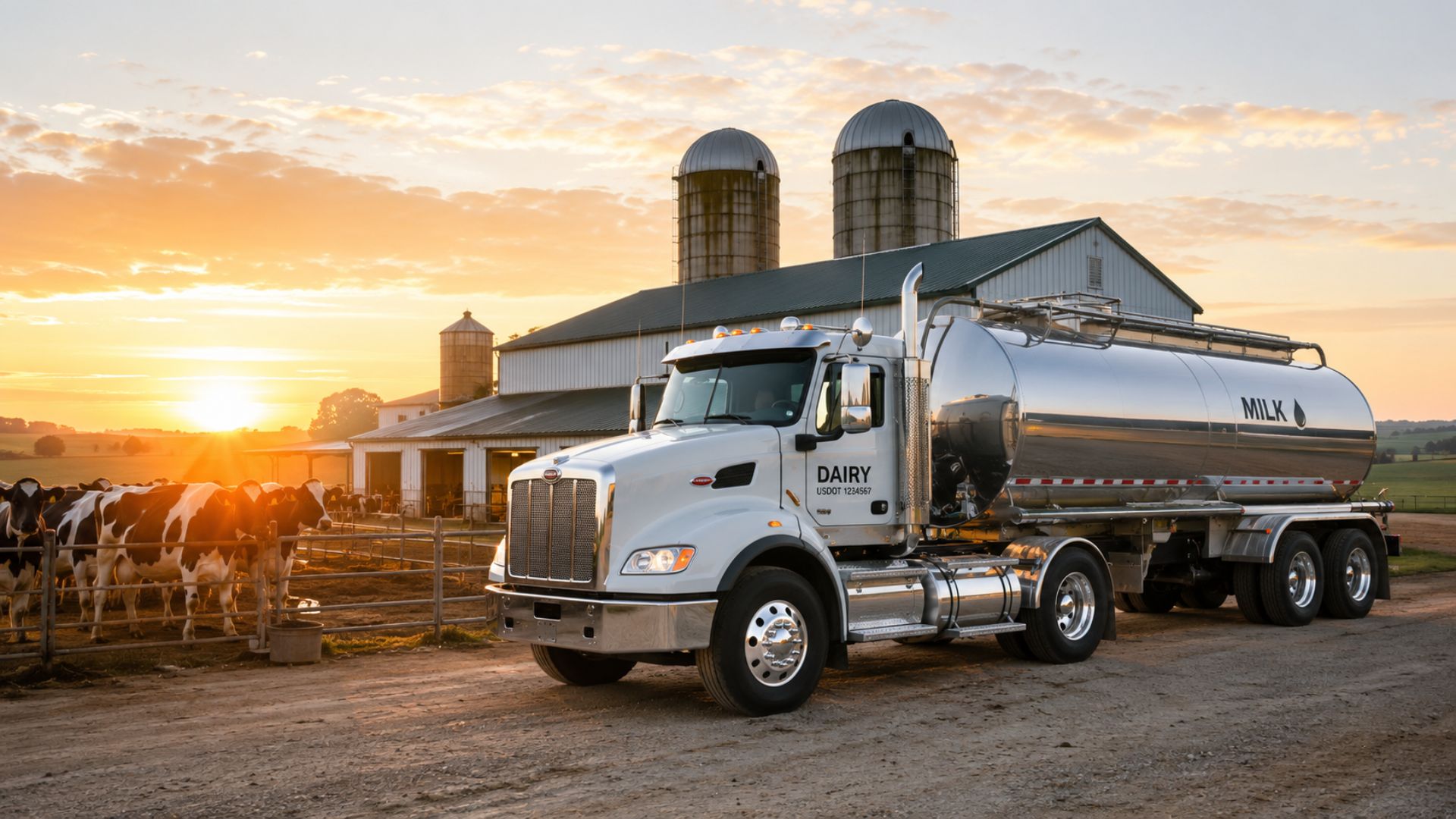
Many Illinois milk haulers pick up raw milk directly from dairy farms and deliver it to processing facilities. These routes can involve multiple farm stops and strict pickup schedules.
Interstate Dairy Transportation
Illinois is centrally located near major dairy-producing states, including Wisconsin, Iowa, Indiana, and Michigan. Some carriers regularly cross state lines depending on their dairy cooperative, customer contracts, and processor locations.
Dedicated Dairy Routes
Some trucking companies operate dedicated routes for specific dairies, cooperatives, or processing facilities. Reliable equipment and consistent service are especially important because milk must continue moving regardless of weekends, holidays, or changing weather.
Essential Insurance Coverages for Illinois Milk Haulers
Commercial Auto Liability
Commercial auto liability helps protect your trucking company when a covered accident results in bodily injury or property damage to others.
Milk tankers can be heavy vehicles operating on rural roads, highways, and around farm properties. Proper liability limits are an important part of protecting the business.
Physical Damage Coverage
A tractor and stainless-steel milk tanker can represent a significant investment.
Physical damage coverage helps protect scheduled equipment against covered losses such as collisions, fire, theft, vandalism, and certain weather events.
Make sure the insured values on your policy reflect what your equipment is actually worth.
Motor Truck Cargo Insurance
Cargo insurance is especially important when transporting raw milk.
A serious accident could make an entire tanker load unusable even if some of the product wasn’t physically spilled. Coverage can depend heavily on what caused the loss and how the policy is written.
Milk haulers should specifically ask how their policy handles:
- Contamination
- Spoilage
- Temperature changes
- Tanker overturns
- Accidental mixing or rejected loads
- Cleanup and disposal expenses
Never assume these exposures are automatically covered. Policy terms and exclusions matter.
Tanker Trailer Physical Damage
Stainless-steel food-grade tanker trailers are specialized equipment and can be expensive to repair or replace.
Your physical damage limits should reflect the actual value of each tanker, including permanently attached equipment when applicable.
General Liability
General liability may provide protection for certain claims arising from business activities outside normal vehicle operation.
The exact coverage needed depends on how your company operates and what services it performs at farms and customer locations.
Illinois Milk Hauling Risks to Watch
Illinois milk haulers deal with changing conditions throughout the year.
Winter brings snow, ice, and freezing temperatures. Rural farm roads and driveways can become difficult to navigate, especially for loaded tankers. During warmer months, maintaining proper handling procedures becomes even more important when transporting a perishable product.
Milk haulers also work under schedules that don’t stop when the weather gets bad. Dairy cows continue producing milk every day, meaning dependable transportation is essential.
Strong maintenance, experienced drivers, and proper insurance all play a role in keeping the operation moving.
What Affects Milk Hauling Insurance Costs?
The cost of milk hauling insurance depends on the specific operation. Insurance companies commonly consider factors such as equipment values, number of trucks, driver experience, operating radius, DOT safety history, previous claims, years in business, and requested coverage limits.
The type of cargo coverage can also make a difference. A policy providing broader protection for specialized dairy transportation may be structured differently from basic motor truck cargo insurance.
Why Specialized Milk Hauling Insurance Matters
A general freight policy isn’t always a good fit for a company hauling raw milk.
Milk transportation involves expensive tanker equipment, perishable cargo, farm pickups, strict schedules, and potential contamination or spoilage exposures. Those details need to be accurately represented when your insurance is written.
Working with an agency that understands agricultural trucking can also make it easier to identify exclusions or gaps before they become a problem during a claim.