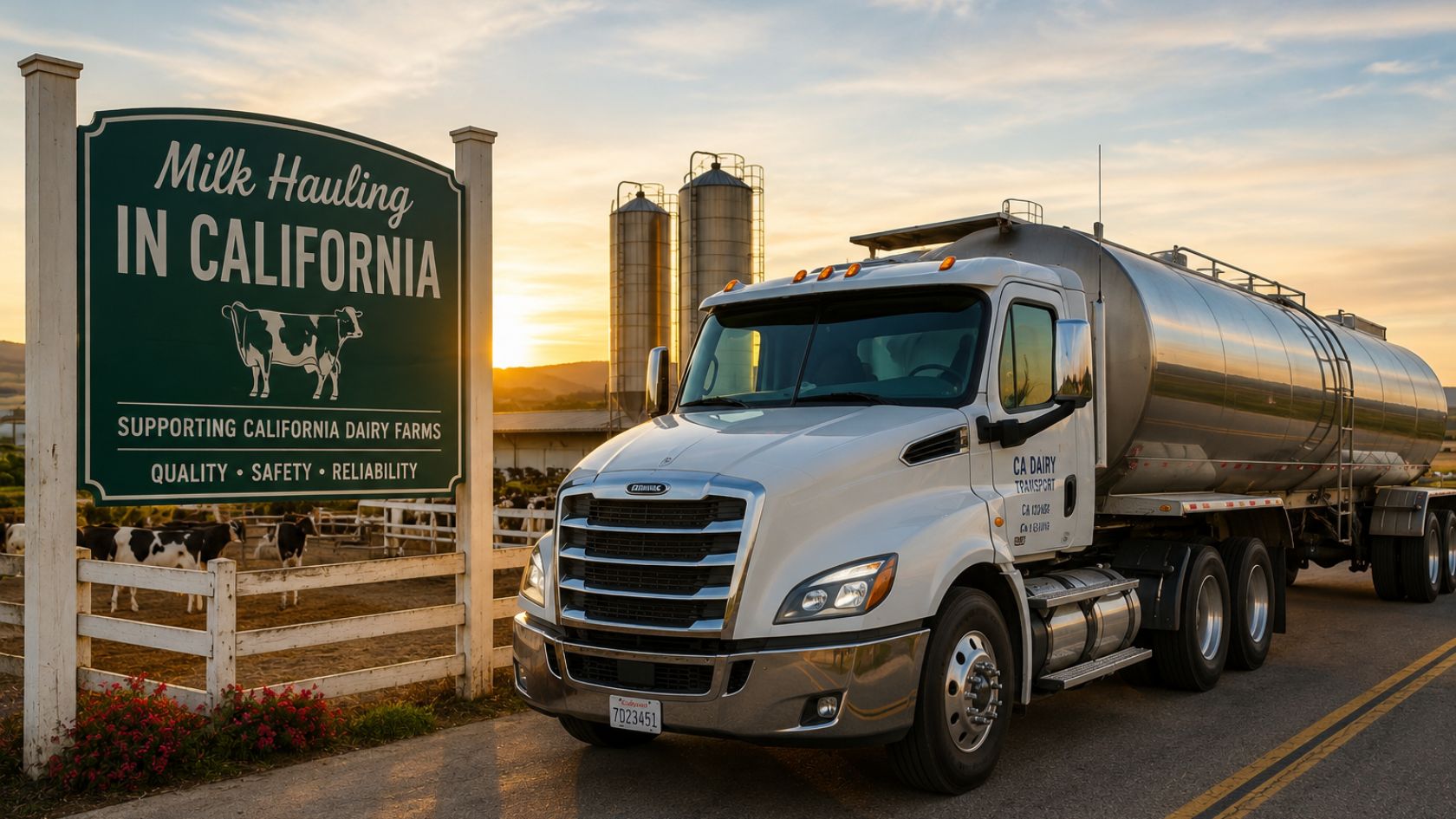
Milk Hauling Insurance in California
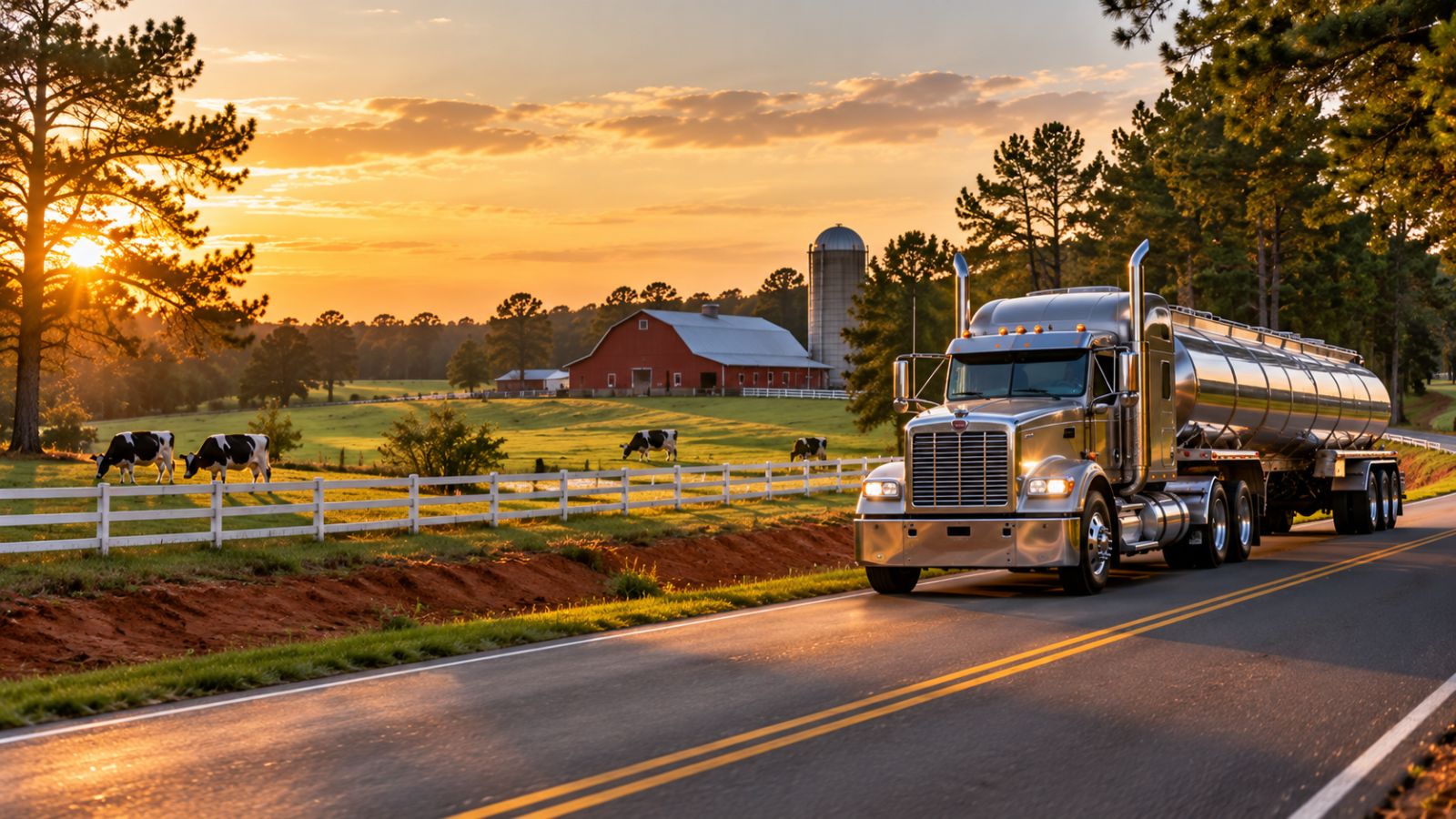
California is America’s largest dairy-producing state, with thousands of dairy farms transporting millions of gallons of milk every day. Moving that milk safely from farm to processor requires specialized equipment, experienced drivers, and the right commercial insurance coverage.
Whether you operate one milk tanker or manage an entire fleet, understanding the risks of milk hauling in California can help protect your business and keep your operation moving.
Why California Milk Hauling Is Unique
California’s dairy industry is unlike any other in the country.
Milk haulers regularly travel between:
- Dairy farms
- Milk processing plants
- Cheese manufacturers
- Butter and yogurt facilities
- Milk transfer stations
Unlike many trucking operations, milk hauling often involves multiple pickups throughout the day and tight delivery schedules to keep dairy products fresh.
Drivers also face unique challenges, including:
- Heavy tanker loads
- Rural roads
- Mountain passes
- Urban traffic
- Strict food safety requirements
- Year-round operations
Because of these exposures, milk hauling requires insurance that’s designed specifically for tanker operations.
Common Risks California Milk Haulers Face
Every trip comes with potential risks that can lead to expensive claims.
Some of the most common include:
Tanker Rollovers
Liquid cargo constantly shifts while driving.
Even experienced drivers can experience load movement that increases rollover risk, especially on:
- Curves
- Exit ramps
- Mountain roads
- Uneven rural highways
Equipment Breakdowns
Milk must remain fresh during transportation.
A mechanical breakdown can delay delivery, damage relationships with processors, and create significant financial losses.
Cargo Contamination
Milk is considered a food-grade commodity.
If contamination occurs because of:
- Improper cleaning
- Equipment failure
- Tank damage
- Temperature issues
the entire load may need to be discarded.
Vehicle Accidents
California’s highways are among the busiest in the country.
Milk tankers frequently operate on:
- Interstate 5
- Highway 99
- State Route 58
- Rural county roads
Heavy traffic increases the likelihood of accidents involving passenger vehicles and commercial trucks.
Weather Conditions
California drivers encounter a wide variety of weather throughout the year, including:
- Dense Central Valley fog
- Heavy winter rain
- High mountain snow
- Extreme summer heat
- Strong crosswinds
Each condition creates additional driving hazards.
Insurance Coverages California Milk Haulers Should Consider
Every operation is different, but most milk hauling companies benefit from several key coverages.
Commercial Auto Liability
Liability insurance pays for injuries and property damage caused to others after an accident.
California requires commercial motor carriers to carry minimum liability limits, but many trucking companies purchase higher limits for greater protection.
Physical Damage Coverage
Physical damage insurance protects your truck and milk tanker against:
- Collision
- Fire
- Theft
- Vandalism
- Storm damage
If your equipment is financed, this coverage is typically required by your lender.
Motor Truck Cargo Insurance
Cargo insurance helps protect the value of the milk you’re transporting.
Many processors and hauling contracts require cargo coverage before allowing carriers to haul loads.
General Liability Insurance
General liability covers incidents away from the roadway, including:
- Customer injuries
- Property damage during loading or unloading
- Certain legal claims unrelated to driving
Pollution Liability
Milk spills can require expensive roadway cleanup.
Pollution liability coverage may help cover cleanup costs and certain environmental claims that standard auto liability policies may not fully address.
Workers’ Compensation
If your company employs drivers or other workers, California law generally requires workers’ compensation insurance.
This coverage helps pay for:
- Medical expenses
- Lost wages
- Rehabilitation costs
- Workplace injury claims
- California Regulations for Milk Haulers
Milk hauling companies operating in California may be subject to requirements from several agencies depending on their operation.
These may include:
- California Highway Patrol (CHP)
- California Department of Motor Vehicles (DMV)
- California Department of Food and Agriculture (CDFA)
- Federal Motor Carrier Safety Administration (FMCSA) for interstate carriers
Requirements vary based on:
- Vehicle weight
- Operating authority
- Interstate or intrastate operations
- Type of cargo hauled
Working with an insurance agent familiar with California trucking regulations can help ensure your coverage meets applicable requirements.
Ways to Reduce Insurance Costs
Insurance premiums depend on many factors, but there are several ways milk haulers can improve their risk profile.
Hire Experienced Drivers
Drivers with clean commercial driving records often qualify for better insurance rates.
Maintain Equipment
Routine inspections and preventative maintenance help reduce breakdowns and accidents.
Use Safety Technology
Features such as:
- Dash cameras
- Electronic logging devices (ELDs)
- Collision mitigation systems
- Telematics
can improve safety and may qualify for insurance discounts.
Implement Driver Training
Regular safety meetings and tanker-specific driver training help reduce costly claims.