Grain Hauling Insurance in Illinois
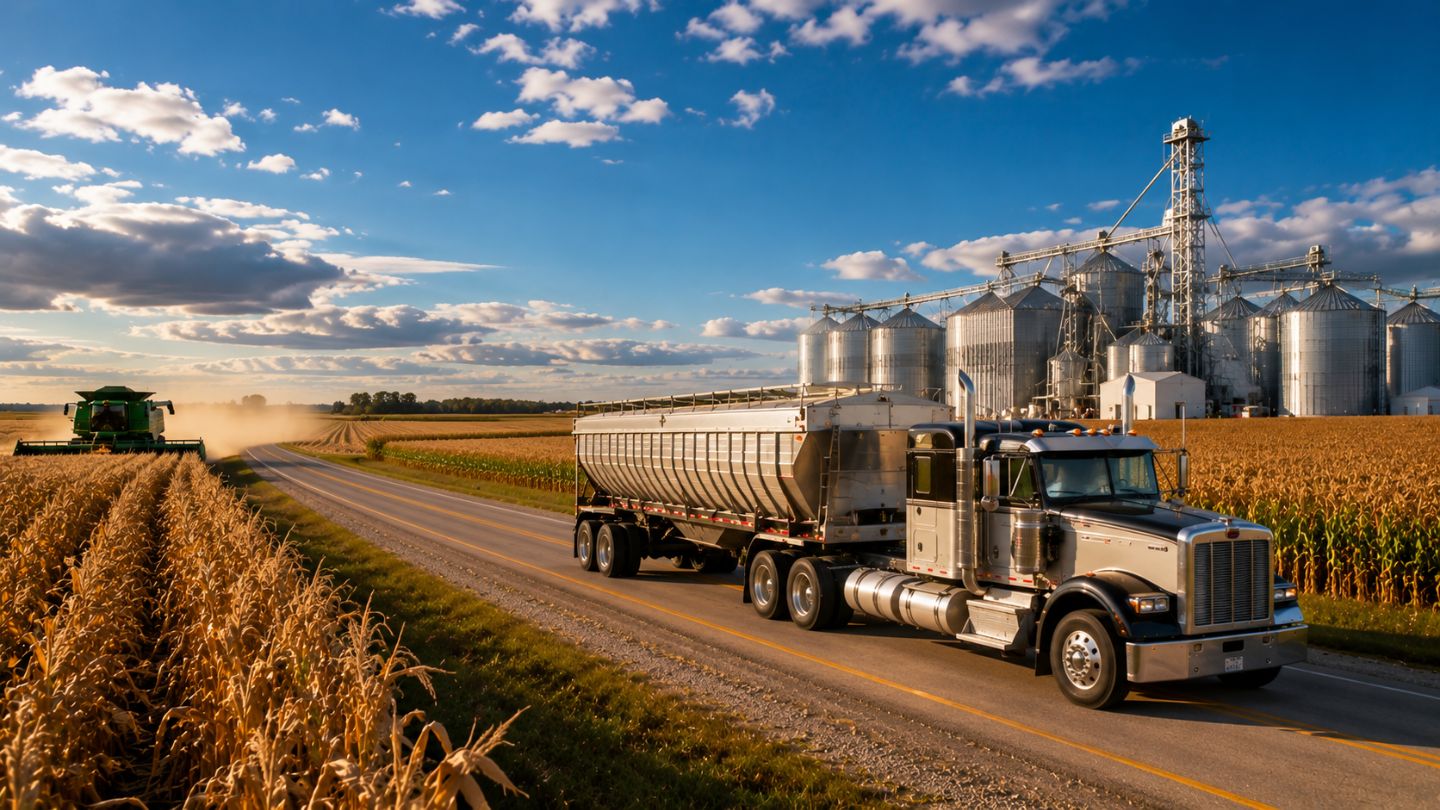
Illinois is one of the nation’s top producers of corn and soybeans. Every harvest season, thousands of hopper bottom trailers move grain across the state to elevators, feed mills, ethanol plants, rail terminals, and Mississippi River ports.
Whether you’re an owner-operator or manage a fleet, grain hauling comes with unique risks that require insurance built specifically for agricultural trucking.
Why Grain Hauling Is Different
Unlike general freight, grain hauling involves seasonal demand, rural roads, specialized trailers, and agricultural commodities.
Grain haulers regularly face:
- Long harvest hours
- Rural highways and farm roads
- Hopper bottom trailers
- Loading and unloading hazards
- Weather-related delays
- High-value grain cargo
A single accident can damage equipment, spill grain, and result in costly cleanup and liability claims.
Common Risks for Illinois Grain Haulers
Grain Spills
Improperly secured hopper doors or rollover accidents can result in thousands of bushels of spilled grain, leading to cleanup costs and cargo losses.
Rural Road Accidents
Many grain pickups occur on narrow county roads where soft shoulders, farm equipment, and limited visibility increase accident risks.
Severe Weather
Illinois weather can change quickly during planting and harvest seasons.
Common hazards include:
- Heavy rain
- High winds
- Tornadoes
- Snow and ice
- Dense fog
Weather-related accidents can damage both equipment and cargo.
Equipment Damage
Modern tractors and hopper bottom trailers are expensive to repair or replace following collisions, hail damage, or theft.
Grain Hauling Insurance Coverages
Primary Liability Insurance
Primary liability helps pay for bodily injury and property damage claims if you’re responsible for an accident.
Most interstate grain haulers carry $1 million in liability coverage to satisfy broker and shipper requirements.
Motor Truck Cargo Insurance
Cargo insurance helps protect the value of grain being transported following covered losses.
Coverage limits should reflect the value of a fully loaded hopper trailer.
Physical Damage Coverage
Physical damage insurance covers your truck and trailer for:
- Collision
- Fire
- Theft
- Vandalism
- Hail and storm damage
Hopper Bottom Trailer Coverage
Your hopper bottom trailer should be specifically insured for physical damage since it represents a significant investment.
General Liability Insurance
General liability provides additional protection for certain claims occurring away from normal vehicle operation.
Umbrella Liability Coverage
Many grain hauling businesses purchase umbrella insurance for added liability protection.
Illinois Requirements for Grain Haulers
Depending on your operation, you may need:
- USDOT Number
- MC Authority (for interstate hauling)
- UCR Registration
- MCS-90 Filing
- Proof of Insurance
- FMCSA Compliance
Maintaining strong DOT safety records can improve your insurance options and help reduce premiums.
What Affects Grain Hauling Insurance Costs?
Insurance companies consider several factors when determining rates.
Driver Experience
Drivers with clean records generally qualify for better pricing.
Operating Radius
Local grain routes are typically less expensive to insure than long-distance operations.
Equipment Value
Newer tractors and hopper trailers cost more to insure than older equipment.
Cargo Value
The value of the grain being hauled influences cargo insurance limits and premiums.
Claims History
Prior accidents, cargo losses, and violations can significantly affect insurance costs.
Why Specialized Grain Hauling Insurance Matters
Grain hauling is one of the largest sectors of agricultural trucking in Illinois. Standard trucking policies may not fully address the risks associated with grain commodities, hopper bottom trailers, and seasonal harvest operations.
A specialized agricultural trucking policy helps protect your:
- Trucks
- Hopper bottom trailers
- Grain cargo
- Drivers
- Business assets